
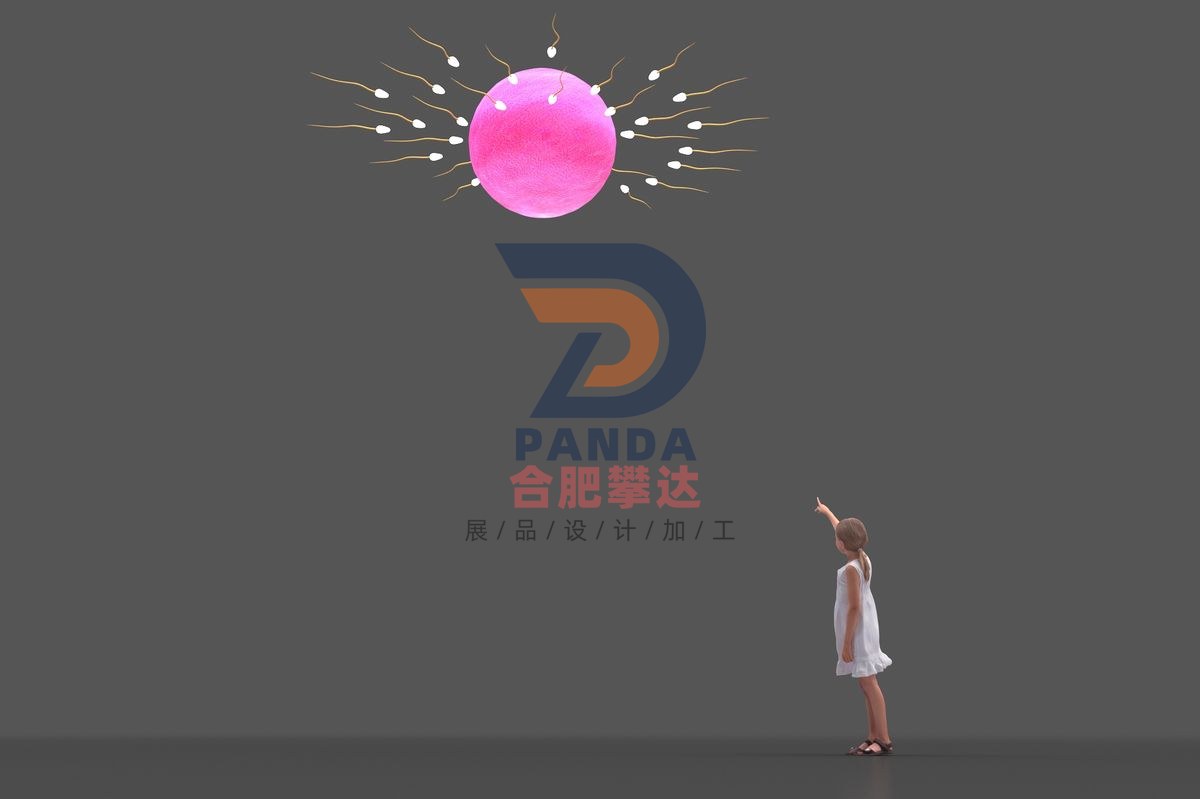
Eggs and sperm
Health & Wellness · Interactive
- DimensionsSubject to on-site plan
- PresentationInteractive
- PricingQuoted by manufacture spec
Purpose & Scientific Principle
Through model display, participants can understand the starting point of life journey and inspire everyone to explore the miracle of life.
How to Operate
This exhibition item is suspended above the exhibition hall, with multiple swimming sperm models and an egg model, combined with lighting effects, to vividly interpret the beginning of life. Visitors can learn about the starting point of life through this exhibition.
The egg is the reproductive cell of a female organism. It is usually spherical in shape, has a nucleus and is surrounded by a vitelline membrane. Both animals and seed plants can produce eggs, among which the eggs of higher organisms are produced by the ovaries. When most mammals are born, immature eggs are already present in the ovaries, and the number of eggs does not increase after maturity. For humans, the egg is the largest cell in the human body, with a diameter of about 0.1 mm.
Sperm is the reproductive cell of male organisms and can be divided into animal sperm and plant sperm. It is the male gamete in heterogametic reproduction, a haploid reproductive cell. For animals, sperm are the male reproductive cells in the sexual reproduction process of animals; for plants, sperm are produced by spermatozoa. Generally speaking, sperm refers more to the mature reproductive cells of humans or male animals in the testicles (testicles).
Related Exhibits


Need a quote for this piece or a full exhibit configuration? Tell us your venue area, theme direction, and budget range.