
DNA and Heredity
Health & Wellness · Interactive
- DimensionsSubject to on-site plan
- PresentationInteractive
- PricingQuoted by manufacture spec
Purpose & Scientific Principle
Through models and interactive splicing, participants can understand the structure of DNA, and through their own comparative interactions, they can learn about genetics-related knowledge.
How to Operate
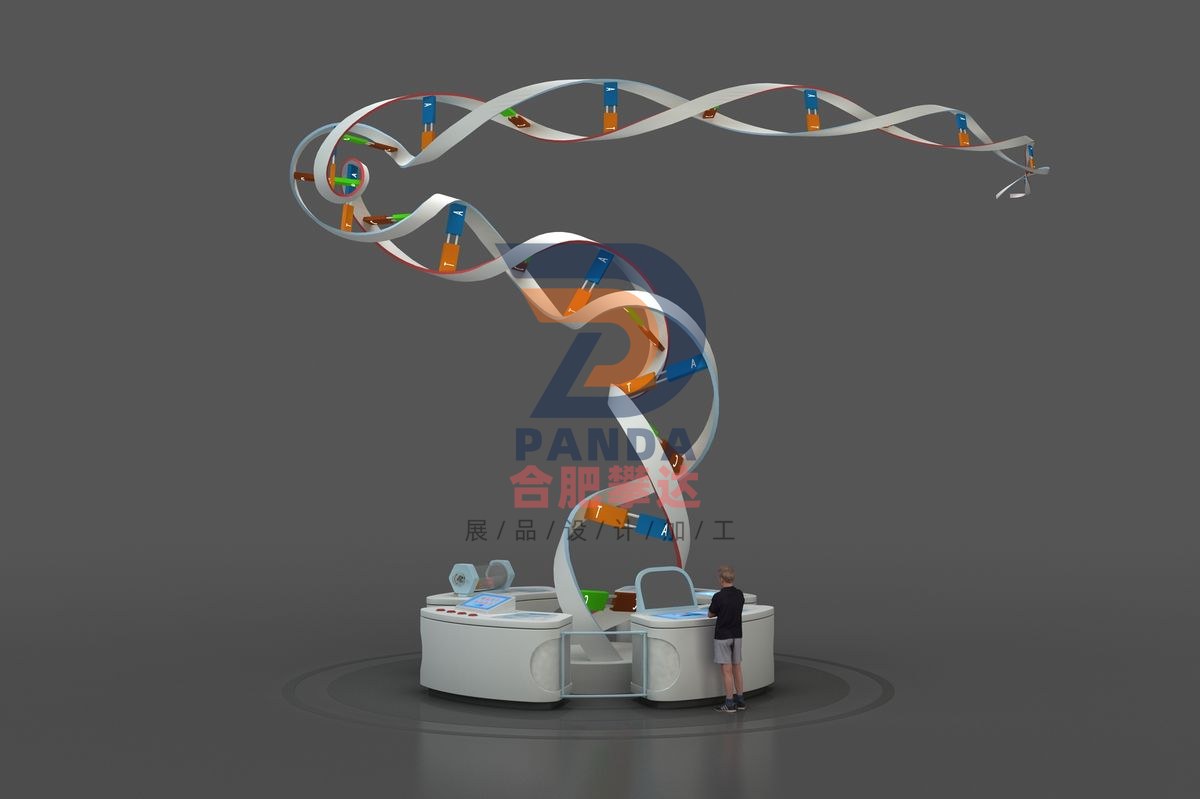
This exhibition consists of interactive models, touch screens, displays, etc., allowing visitors to understand the structure of DNA and related knowledge of genetics. Multimedia includes: DNA assembly, dominant and recessive, blood types and inheritance.
(1) DNA assembly: It consists of a touch screen, a double helix structure and acrylic rods representing the four bases of ATCG. The standby video introduces the principles of base pairing. The four possible base pairs are A-T, T-A, G-C and C-G. When visitors correctly assemble the four bases of ATCG, the LED light will light up.
(2) Dominant and recessive: It consists of a booth, a touch screen, a mirror, a graphic board, etc. The standby video introduces knowledge about dominant and recessive genes.
(3) Blood type and heredity: It consists of a display screen and buttons. A random video introduces the relationship between the blood type of children and the blood type of their parents, allowing visitors to understand the relationship between blood type and heredity.
(4) Genes and Gender: It consists of a booth, buttons, graphic and text light boxes, etc. Participants click the button to select the chromosomes of their parents, and the corresponding light box on the table will light up, demonstrating the connection between the combination of chromosomes and the gender of the child.
There is a spiral DNA model in the exhibition hall, about 10 meters in length (this length is only one hundred millionth of the DNA in a single cell when enlarged). It is surrounded by interactive exhibits and graphic introductions, including DNA assembly, dominant and recessive, blood type and inheritance, genes and gender.
Interaction: Participate in the interaction of DNA assembling and understand the four bases of DNA; Participate in the interaction between dominant and recessive to understand the rules of inheritance; Participate in the interaction between blood type and heredity to understand the rules of blood type inheritance; Participate in the interaction between genes and gender to understand the relationship between genes and gender.
Graphic version: Introducing scientists Watson and Crick’s discovery of the double helix structure of DNA and my country’s contribution to the Human Genome Project.
Related Exhibits
Need a quote for this piece or a full exhibit configuration? Tell us your venue area, theme direction, and budget range.