
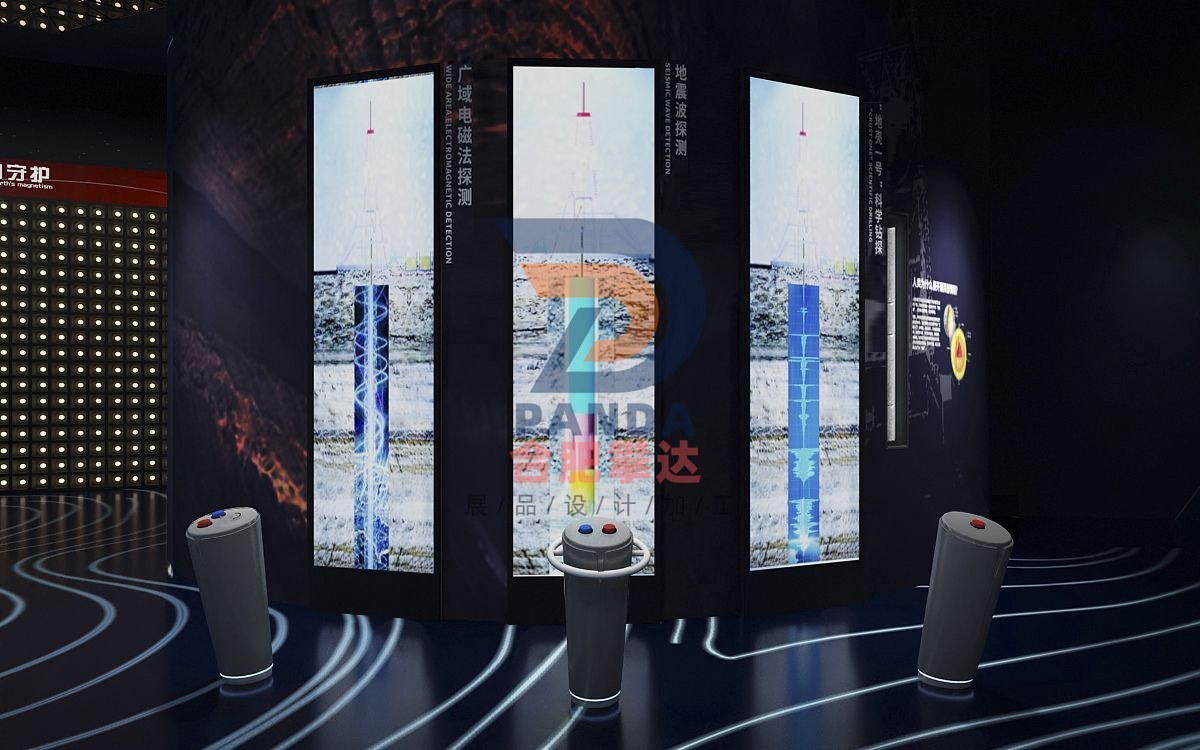
Seismic Wave Detection
Safety & Emergency · Interactive
- DimensionsSubject to on-site plan
- PresentationInteractive
- PricingQuoted by manufacture spec
Purpose & Scientific Principle
This exhibit allows the audience to understand the important value of seismic wave detection in the field of deep earth exploration through multimedia content and interactive operation experience. At the same time, through interactive experience, it depicts the underground terrain and deepens the audience's further understanding of the principles of deep earth exploration.
How to Operate
When an earthquake occurs, the seismic waves generated at the earthquake source propagate underground and encounter corresponding reflection and refraction when encountering the stratigraphic interface. The reflected wave energy can be reflected back to the earth's surface, while the refracted wave will continue to propagate downward and continue to be reflected and refracted when it encounters the wave impedance interface at deeper depths. A seismic wave receiving device on the surface records the received seismic waves, and then images the seismic waves to obtain underground geological structure information.
Seismic waves are artificially excited on the surface. When they propagate underground, they will be reflected and refracted when encountering rock layer interfaces with different media properties. This seismic wave is received by a geophone on the surface or in a well. The seismic wave records are then processed and interpreted to infer the nature, structure and morphology of the underground rock formations.
The depth of target geological bodies for reflection seismic exploration generally ranges from tens of meters to tens of kilometers. Reflection seismic exploration uses the difference in elasticity and density of underground media to infer the nature and shape of underground rock formations by observing and analyzing the earth's response to artificially excited seismic waves. This method is an important means of surveying energy (oil, gas, coal) and mineral resources. It is also widely used in regional geological research, crustal research, and engineering geological survey.
The exhibits are composed of multimedia splicing screens and blasting electromechanical devices, focusing on the key technical points and scientific principles of seismic wave exploration. Through interactive operation experience combined with multimedia digital images, the audience can understand the scientific principles of seismic wave detection technology in the game experience, simplifying complex content and making it easier to accept and understand.
Related Exhibits

Need a quote for this piece or a full exhibit configuration? Tell us your venue area, theme direction, and budget range.