
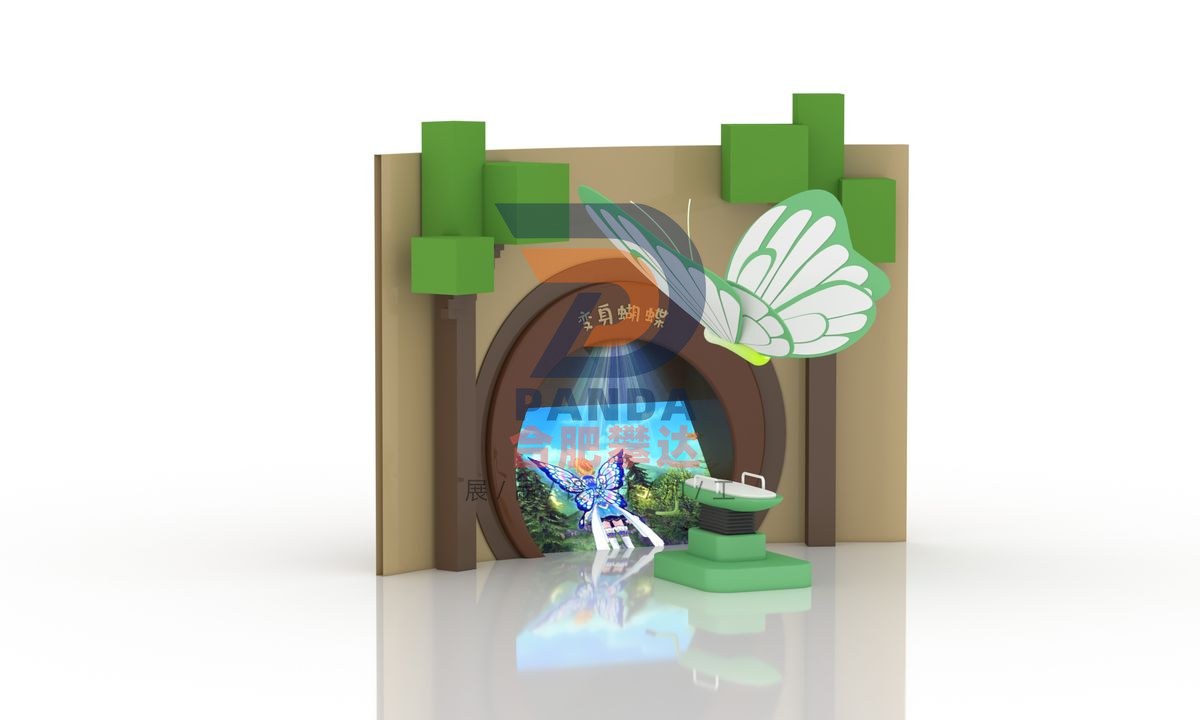
Transform into a Butterfly
Kids' Zone · Interactive
- DimensionsSubject to on-site plan
- PresentationInteractive
- PricingQuoted by manufacture spec
Purpose & Scientific Principle
By simulating butterfly flight interaction, the exhibition allows the audience to feel the butterfly's flight movements, understand the scenes seen during the butterfly's flight, and cultivate their natural cognitive intelligence.
How to Operate
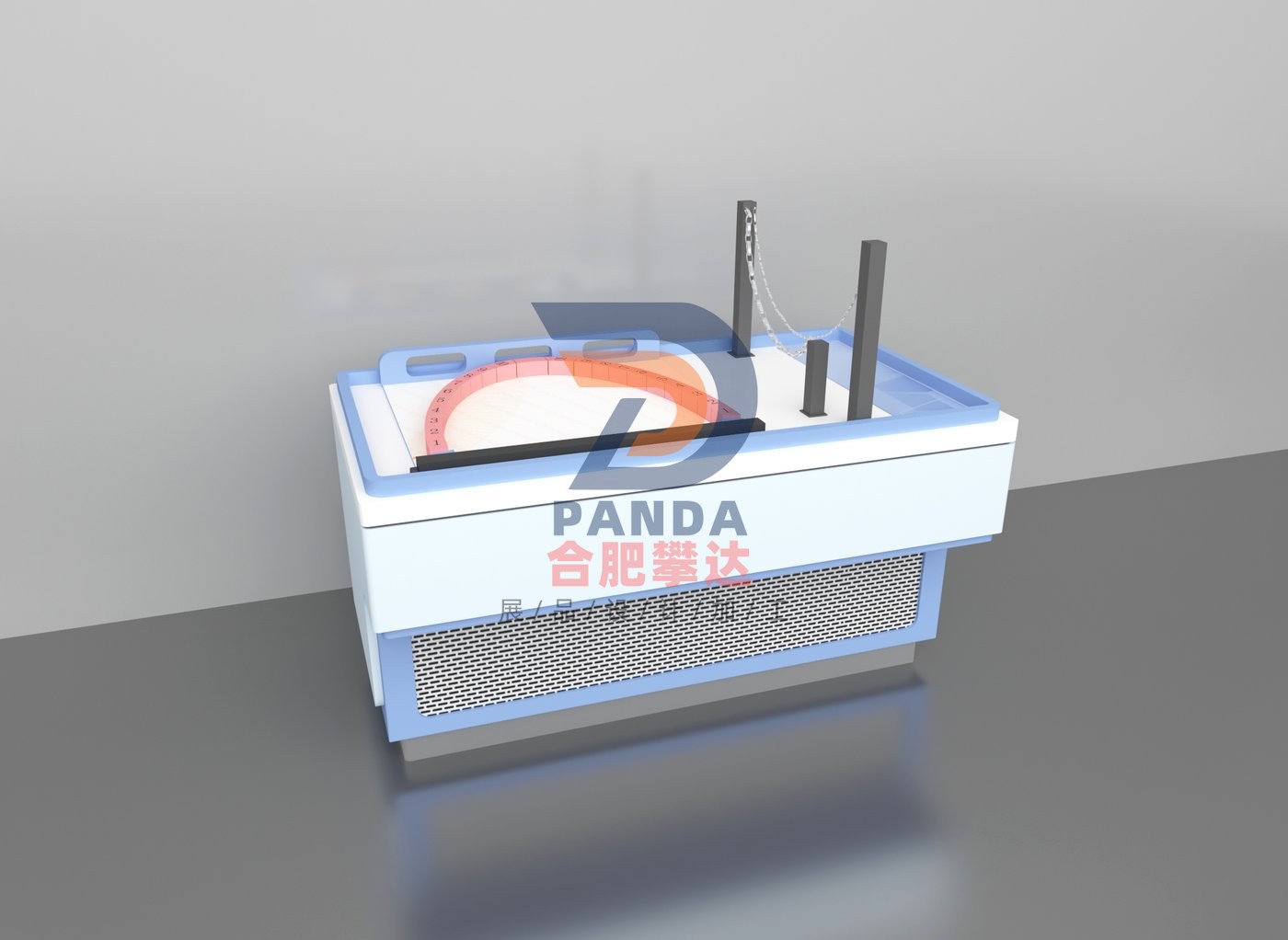
The exhibit is designed as an overall insect wing simulation device, and uses the wing simulation device, lifting platform, lawn scene, and projector to create an independent interactive experience scene. The audience lies on the vibrating platform, controls the handle, controls the flight of the butterfly in the picture, and feels how the butterfly flies; watch the projected picture in front and understand what the butterfly sees when it flies.
Butterfly flight uses micro-scale air vortices or small-scale unstable airflow, which is completely different from the flight principle of large birds. Study the aerodynamic properties of a butterfly in forward flight. The Navier-Stokes equation is numerically solved on the motion overlay grid, and the flapping motion of the left and right wings of the butterfly when flying forward and the pitching motion following the body are calculated. The results show that butterflies mainly use the "resistance principle" for flapping flight, that is, the lifting force to balance the body weight and the thrust to overcome the body resistance are mainly provided by the resistance of the wings. Butterfly wings produce a large transient resistance (a force parallel to the flapping motion) during the downbeat. Analysis of the flow structure shows that the mechanism that generates this force is as follows: Each downbeat generates a strong "vortex ring" composed of the leading edge vortex, the wing tip vortex and the starting vortex, which contains a jet along the flapping direction. The reaction force generated by this jet is the resistance of the wing. The lifting force to balance the weight of the body is mainly provided by the drag force generated in the downbeat of the wings. During the upstroke (due to the upward tilt of the body, the upstroke is actually flapping backward and upward), the wings also produce resistance, but it is much smaller than during the downstroke. The thrust that balances the body's drag is provided primarily by the drag generated in the upbeat of the wings.
Related Exhibits
Need a quote for this piece or a full exhibit configuration? Tell us your venue area, theme direction, and budget range.