
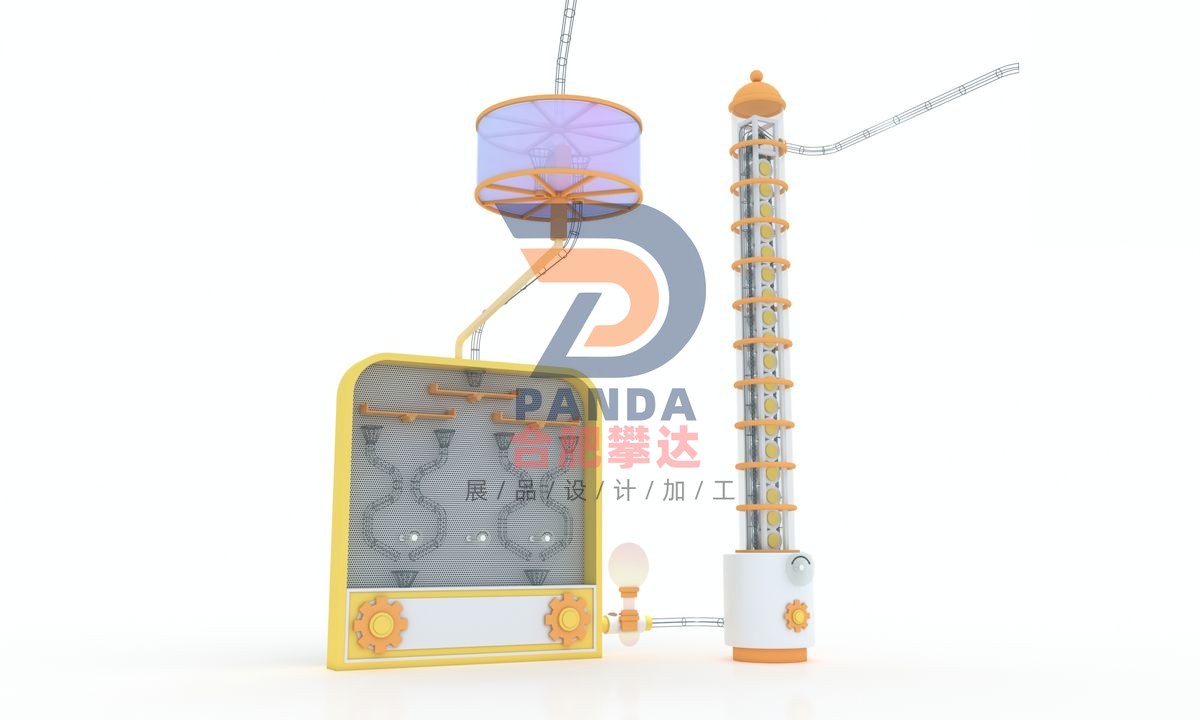
How does water get to my home - water distribution slide
Kids' Zone · Interactive
- DimensionsSubject to on-site plan
- PresentationInteractive
- PricingQuoted by manufacture spec
Purpose & Scientific Principle
The exhibition group uses the story of domestic water extraction, purification and then transportation to our homes as the background of the story. The movement route of the small ball represents the transportation route of water. The use of mechanical interaction allows children to cultivate their attention, exercise their reflexes, and enhance their understanding of shape characteristics, mechanical movement, and potential energy conversion. Learn how water pumped from the ground or rivers is purified to meet the standards for our daily use.
How to Operate
The small balls from the previous link enter the open funnel. A ball dividing device is set up under the funnel, and then enter the "Water Tower Obstacle House" and "Water Distribution Slide" in sequence.
After the small ball enters the exhibition item, the audience turns the hand wheel to control the small ball to enter the ball collecting trough below through different paths. An inclined track is set up in the ball collecting trough, and the small ball enters the chain lifting device. The audience turns the handwheel, and the ball is lifted through the chain to the top and enters the next stage.
The exhibition items are set in two modes: manual and automatic. Within a certain period of time, when no one is participating, they will run automatically to ensure that the exhibition group runs in an orderly manner and does not get stuck.
Tap water is transported from unpolluted rivers and reservoirs to water plants. After it is disinfected by the water plant and reaches drinking water standards, it is then transported to residential water pipes for daily water use by residents. The exhibition group uses the story background of domestic water extraction, purification and then transportation to our homes. The movement route of the ball represents the transportation route of water. The use of mechanical interaction allows children to cultivate their attention, exercise their reflexes, and enhance their understanding of shape characteristics, mechanical movement, and potential energy conversion. Learn how water pumped from the ground or rivers is purified to meet the standards for our daily use.
Related Exhibits
Need a quote for this piece or a full exhibit configuration? Tell us your venue area, theme direction, and budget range.