
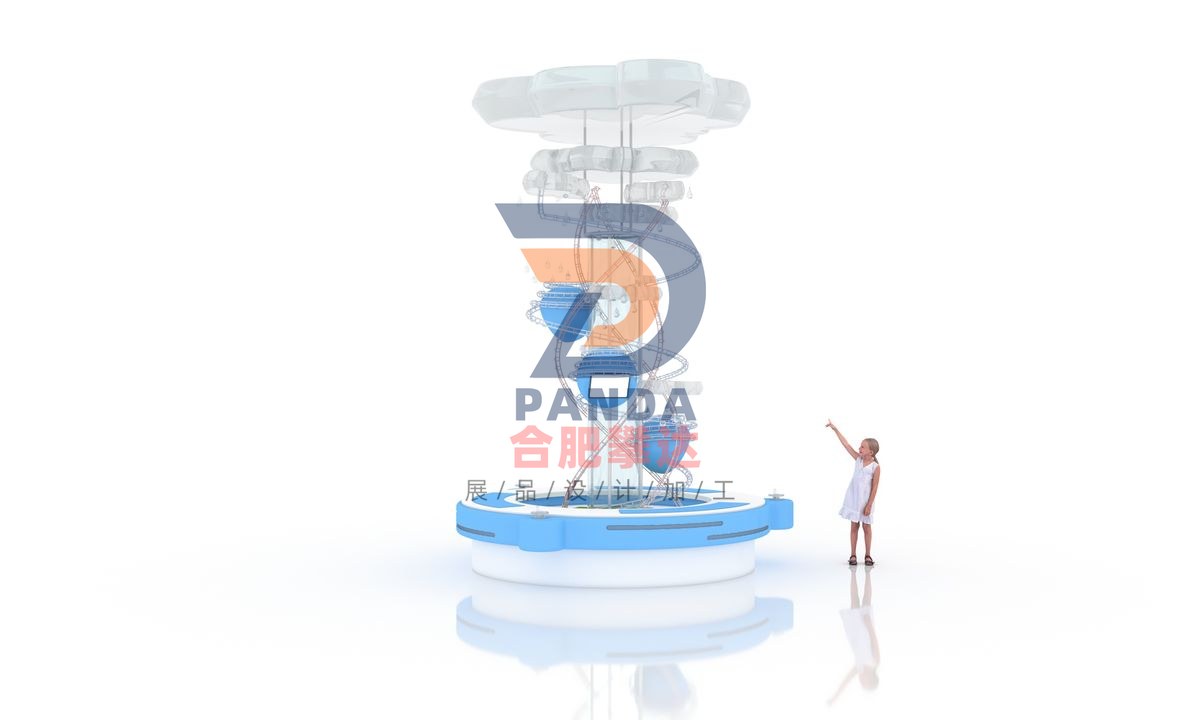
How Rain is Formed
Kids' Zone · Interactive
- DimensionsSubject to on-site plan
- PresentationInteractive
- PricingQuoted by manufacture spec
Purpose & Scientific Principle
Through interesting electromechanical interactions, the exhibition helps the audience understand the process of water circulation in nature and explore how rain is formed.
How to Operate
The exhibits mainly consist of computers, monitors, handwheel interactive mechanisms, cloud models, rain models, lake models, ball lifting mechanisms, exhibition stands, etc.
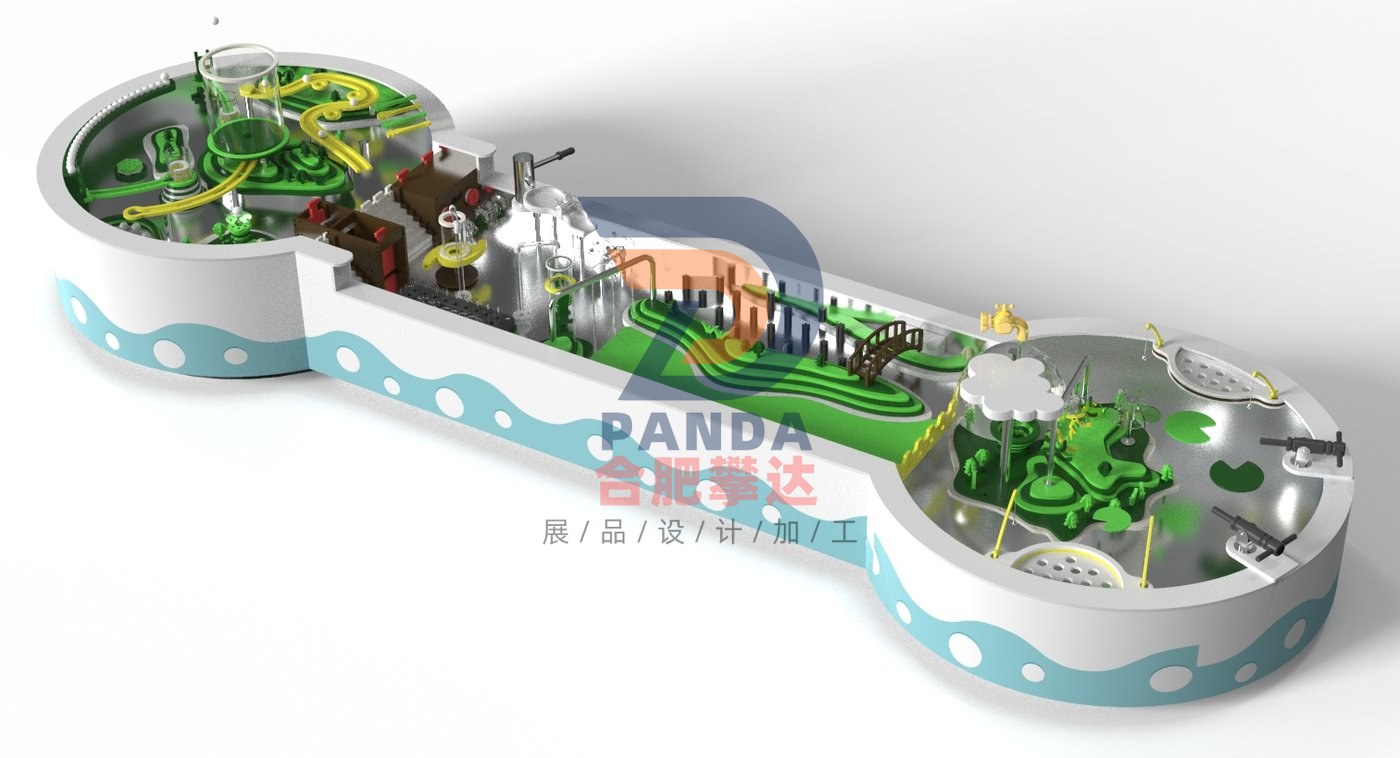
The exhibition is equipped with a surface water circulation device. The upper part is a cloud and rain model device, and the lower booth has scenes such as rivers, lakes, and oceans. The audience turns the handwheel to shake the water (small balls) in the lakes and oceans through the track into the clouds (the atmosphere). After accumulating a certain amount, lightning and thunder appear, and the rain light starts to rain. At the same time, the ball falls along the track. The small ball rolls through the biosphere tray, the lithospheric tray, and the pedosphere tray respectively (indicating infiltration), and finally rolls into the lake and ocean. The display shows the process and main links of the water cycle.
Under the influence of solar energy and thermal energy on the earth's surface, water on the earth is constantly evaporated into water vapor and enters the atmosphere. Water vapor condenses into water when it is cooled, and falls to the ground in the form of precipitation under the action of gravity. This repeated process is called the water cycle. The water cycle is divided into macrocycle and minor cycle. The water vapor evaporated from the ocean is carried over the land by air currents, condenses into rain, snow, hail, etc. and falls to the ground. Part of it is evaporated and returned to the atmosphere, and the rest becomes surface runoff or underground runoff, etc., and finally returns to the ocean. This reciprocating movement of water between the ocean and land is called the water cycle. The water cycle that only occurs in a local area (land or ocean) is called the small cycle of water. The water cycle in the environment is intertwined with large and small cycles, and is constantly going on on a global scale and in various regions on the earth.
Related Exhibits
Need a quote for this piece or a full exhibit configuration? Tell us your venue area, theme direction, and budget range.