
Ant House
Kids' Zone · Interactive
- DimensionsSubject to on-site plan
- PresentationInteractive
- PricingQuoted by manufacture spec
Purpose & Scientific Principle
focuses on experiential interaction, helping the audience understand the living habits of ants through hands-on operations, and cultivate children's operational skills and natural cognition.
How to Operate
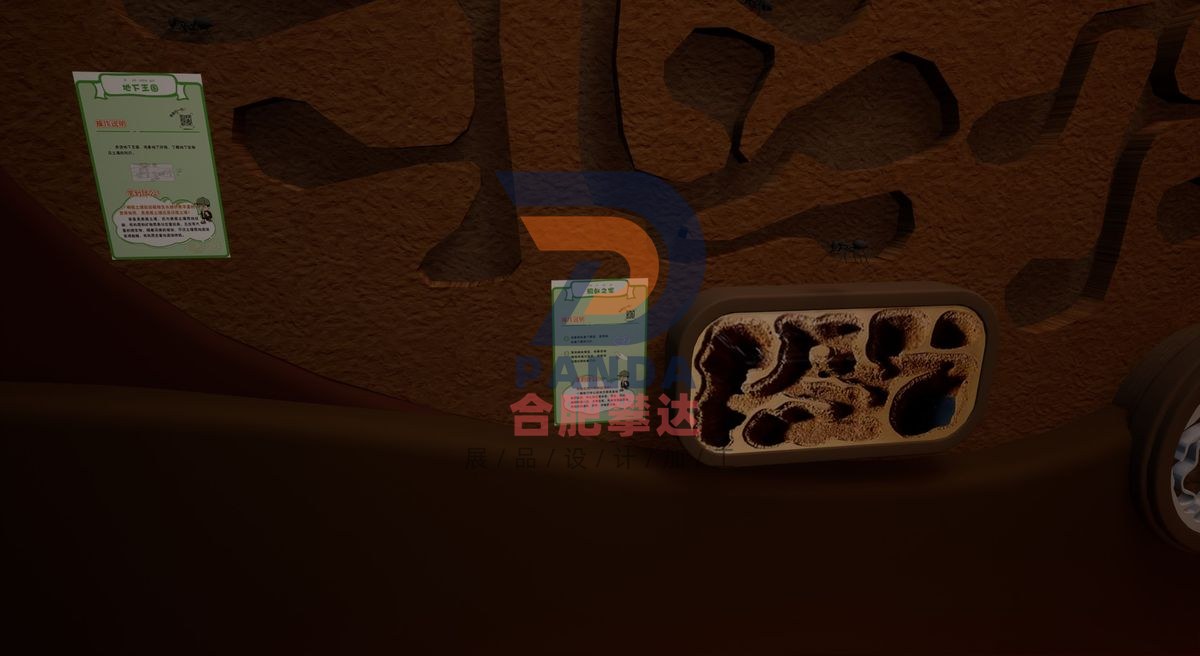
The exhibition items mainly consist of ant nest models, ant mazes, graphic and text versions, etc.
Look at the ant nest model on the wall and feel the wonder of ant nest architecture. There are two ant mazes set up on the wall. The audience can pick up the ant model on the glass, attract the real objects under the glass through the glass, and help the ants carry the real objects to the ant nest through the maze game.
There are various forms of ant nests. Most species build their nests in the underground soil and dig tunnels, chambers and shelters. The excavated materials and leaves are piled near the entrance to form a hillock shape for protection. Some ants also use plant leaves, stems, petioles, etc. to build paper-like nests and hang them on trees or between rocks. There are also ants that live in dead wood in forest areas. What's even more special is that some ants build their nests in or next to the nests of other types of ants; the two "homes" do not have any disputes and can live in harmony. This kind of ant nest is called a mixed ant nest, and it is actually a symbiosis of different species. The number of ants in a nest can vary greatly among different ant species or the same species. The smallest colonies only have dozens or nearly a hundred ants, but there are also thousands of ants, while large colonies can have tens of thousands or even more ants.
Related Exhibits
Need a quote for this piece or a full exhibit configuration? Tell us your venue area, theme direction, and budget range.