
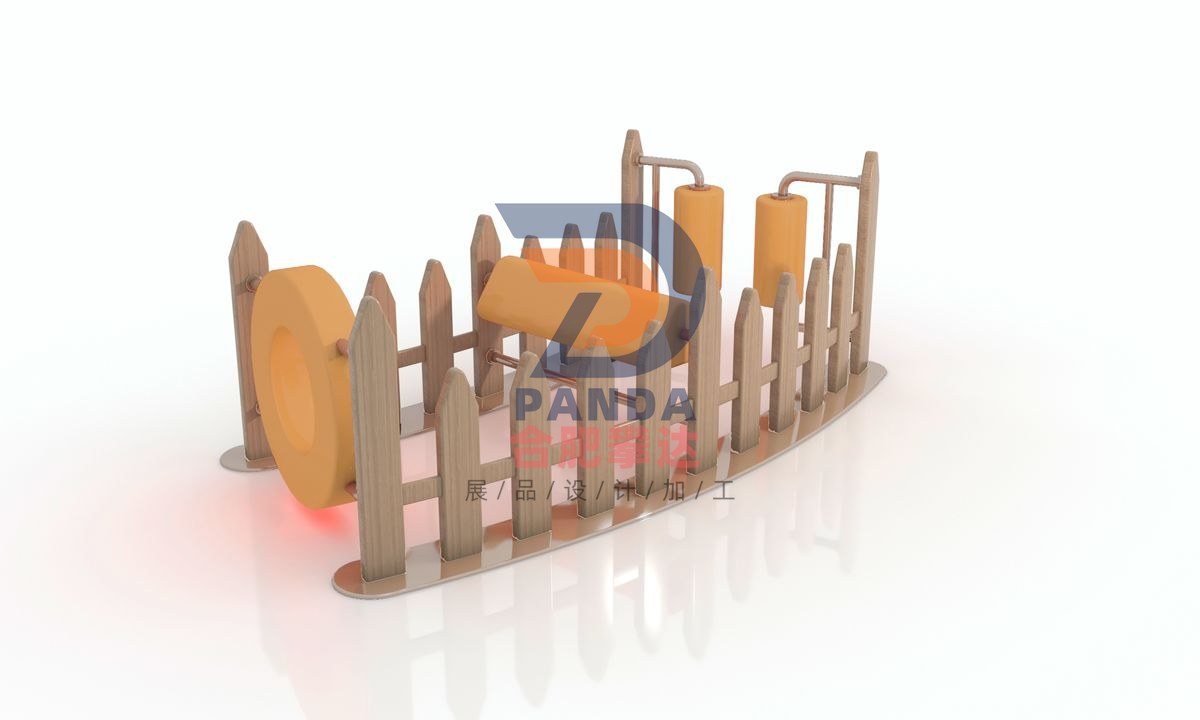
Obstacle Race
Kids' Zone · Interactive
- DimensionsSubject to on-site plan
- PresentationInteractive
- PricingQuoted by manufacture spec
Purpose & Scientific Principle
The exhibition items use small games to comprehensively exercise children's physical functions, help children develop endurance, enhance muscle flexibility, exercise reaction speed and agility, improve the function of internal organs, and can also cultivate children's excellent qualities such as bravery, tenacity and not being afraid of difficulties.
How to Operate
The exhibits consist of support frames and obstacles.
The exhibition item is a jungle obstacle course. Let the children start from the starting point and complete the race through three sets of obstacles: drilling holes, jumping over flippers, and walking through the jungle.
Obstacle racing originated from fox hunting and was once a game for children to imitate adults' fox hunts.
The British first introduced this activity in the mid-19th century. It was first performed in the wild, and the obstacles to be crossed were tree branches and river ditches. The distances between the obstacles were also different in length. In the mid-19th century, it began to be performed on the track. The height of the hurdles used in the original obstacle course was the same as that in the hurdle race (91.4 cm), but it was required to be stronger and the athletes could use their hands and feet. The sport is also more technically demanding than hurdle racing. Some research reports point out that the distance of obstacle races in the 19th century was not uniform and highly arbitrary, ranging from as short as 440 yards to as long as 3 miles. The first competition was held at Oxford University in 1864. It was listed as an official event in the second Olympic Games in 1900. The distance of obstacle running competitions in subsequent Olympic Games was between 2,500 meters and 4,000 meters. It was not until the seventh Olympic Games that the distance was fixed at 3,000 meters.
Related Exhibits
Need a quote for this piece or a full exhibit configuration? Tell us your venue area, theme direction, and budget range.