
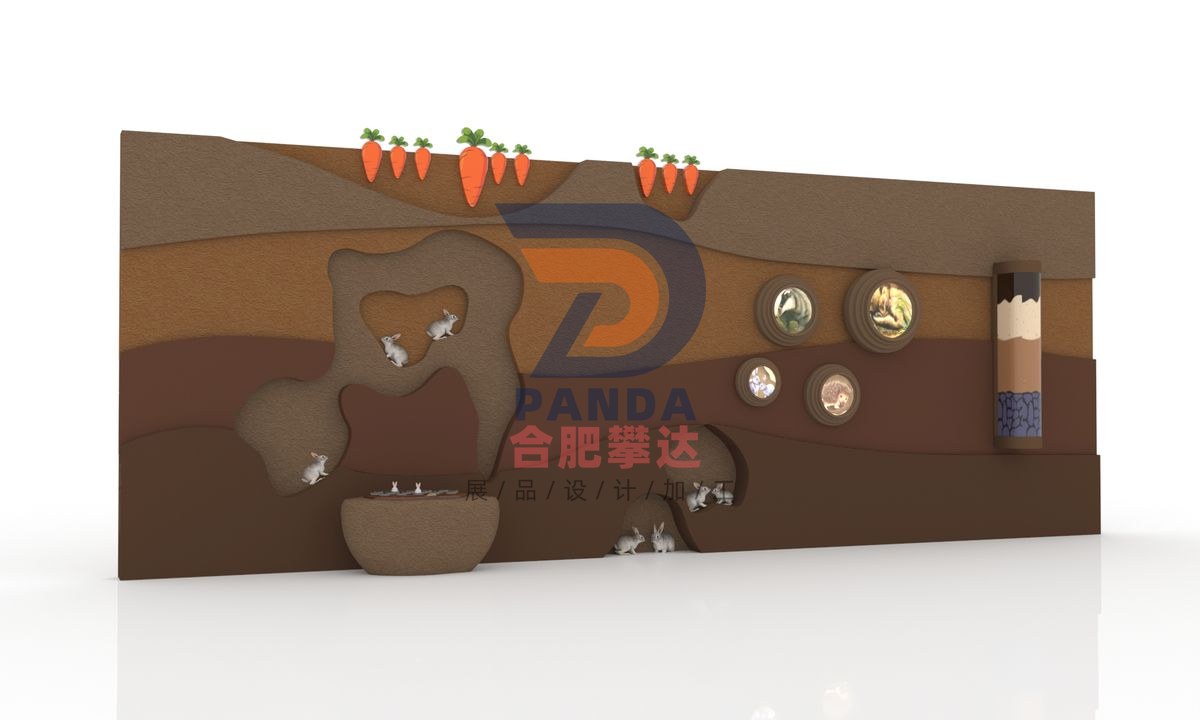
Three Cunning Rabbits in the Cave
Kids' Zone · Interactive
- DimensionsSubject to on-site plan
- PresentationInteractive
- PricingQuoted by manufacture spec
Purpose & Scientific Principle
The exhibits use models and electromechanical interactions to help children understand the living habits of rabbits and the knowledge of rabbit nests in the form of scene restoration and hands-on operations, and cultivate children's interest in scientific inquiry.
How to Operate
The exhibition items consist of a booth, rabbit model, hammer, digital tube, buttons, electronic control system, etc.
When the audience participates, they press the start button and the rabbit randomly pokes its head out of the hole. The audience picks up a hammer and hits the rabbit's head. They see how many times they can hit the rabbit within the specified time and feel how many entrances and exits there are in the rabbit hole.
Rabbits are timid animals and will be frightened by sudden noises, strangers, and strange animals such as cats and dogs. During feeding and management, noises that cause rabbits to panic should be avoided as much as possible, and strangers, cats and dogs, etc. should be prohibited from entering the rabbit house. Rabbits have sharp hearing and a sensitive sense of smell, but they are timid and afraid of being frightened and are good at running. Sudden startle - When there is a sudden noise, you will immediately be alert or run away quickly. They will be panicked by sudden noises or smells or sights of strangers, dogs, cats, snakes, rats, insects, etc., and will make loud bangs (snaps), stamp their feet (stamp their feet), run, and hit cages in order to escape from enemies. Its home usually has many holes (three holes for cunning rabbits) to avoid enemies. In winter they simply follow their own tracks back.
Related Exhibits


Need a quote for this piece or a full exhibit configuration? Tell us your venue area, theme direction, and budget range.