
Plant Nutrient Transportation
Kids' Zone · Interactive
- DimensionsSubject to on-site plan
- PresentationInteractive
- PricingQuoted by manufacture spec
Purpose & Scientific Principle
Through multimedia interaction, the exhibits allow the audience to understand plant photosynthesis and nutrient transportation, and cultivate children's interest in scientific inquiry.
How to Operate
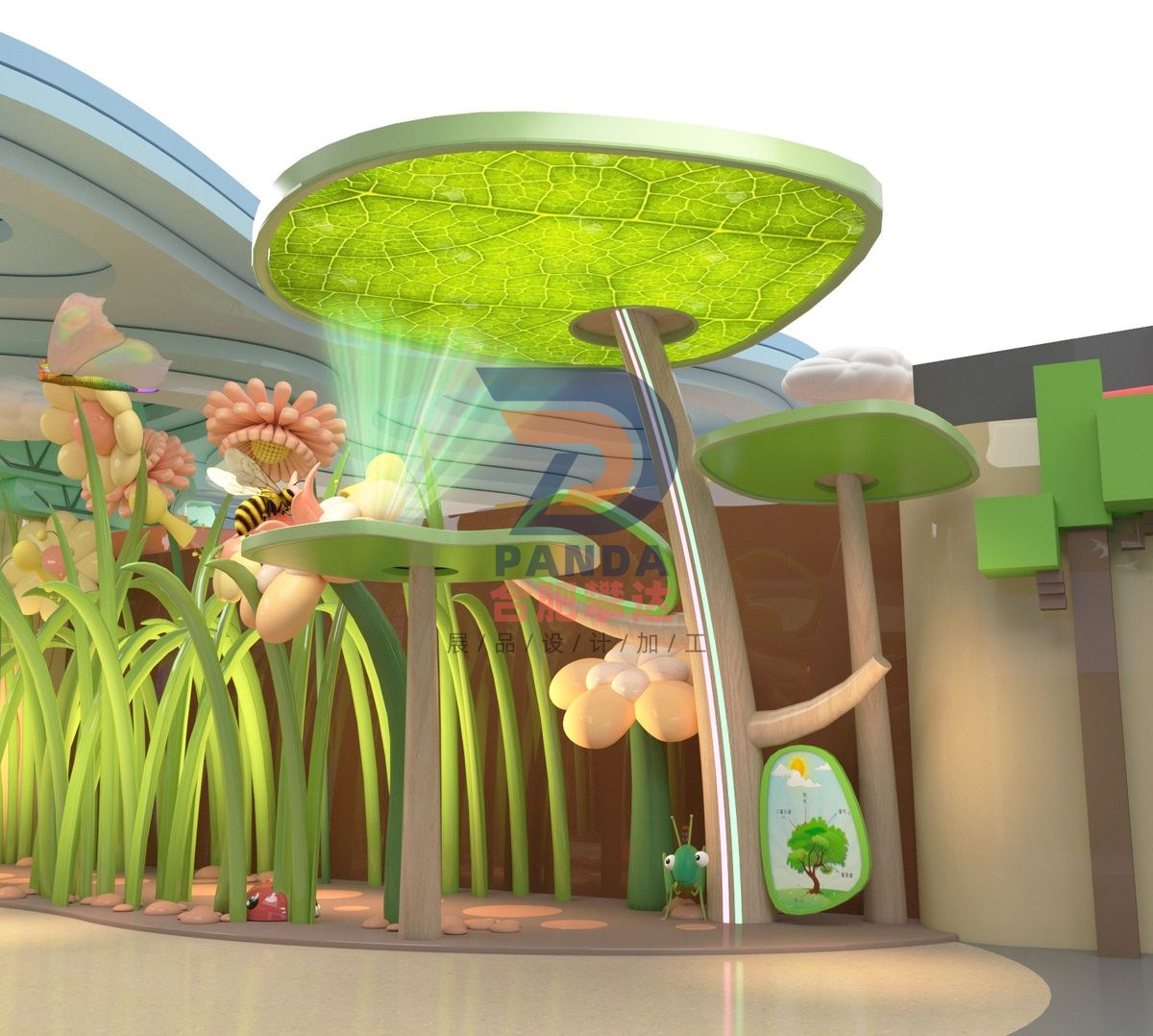
The exhibition items consist of tree models, LED running lights, projectors, etc.
The exhibition uses a tree model as a carrier to show the audience the path of nutrients transported inside the plant during photosynthesis, allowing the audience to understand that plants have a circulation system similar to that of the human body to ensure sufficient nutrients and water.
The main body of the exhibition is a tree model, and the trees are planted on a soil base. The trees are equipped with LED running light strips of different colors from leaves to roots. As the audience approached the exhibition, LED light strips of one color began to light up sequentially from bottom to top, representing the transportation of raw materials such as water and inorganic salts from the roots upward to the leaves through the tubes; the projector demonstrated the phenomenon of photosynthesis on the leaf model; then the LED light strips of another color began to light up gradually from top to bottom, representing the transportation of sugars and other organic matter after photosynthesis from the leaves to the roots through the plant sieve tubes.
Plants are different from animals in that they do not have a digestive system, so they must rely on other methods to absorb nutrients. Plants are a type of so-called autotrophic organism. For green plants, they use sunlight energy to perform photosynthesis during the sunny day to obtain the nutrients necessary for growth and development. Photosynthesis involves green plants containing chloroplasts. Under the irradiation of visible light, through light reaction and carbon reaction (formerly known as dark reaction), they use photosynthetic pigments to convert carbon dioxide (or hydrogen sulfide) and water into organic matter, and release oxygen or hydrogen. The reason why residues are called producers of the food chain is because they can use inorganic matter to produce organic matter and store energy through photosynthesis. Through consumption, consumers in the food chain can absorb the energy stored in plants and bacteria, with an efficiency of about 10% to 20%. Vessels: Vessels are located in the xylem of the plant and are made of dead cells. The length and thickness of vessel molecules vary greatly among various plants. The diameter of most plant vessel molecules is generally between 20-30 microns. The function of the conduit is to transport raw materials such as water and inorganic salts from bottom to top.
Sieve tubes: Sieve tubes are located in the phloem of plants and are composed of living cells. Generally, the length of sieve tube molecules is between 100-2000 microns and the diameter is only 20-30 microns. The function of the sieve tube is to transport sugars and other organic matter synthesized by plants through photosynthesis from top to bottom to the roots of the tree.
Related Exhibits
Need a quote for this piece or a full exhibit configuration? Tell us your venue area, theme direction, and budget range.