
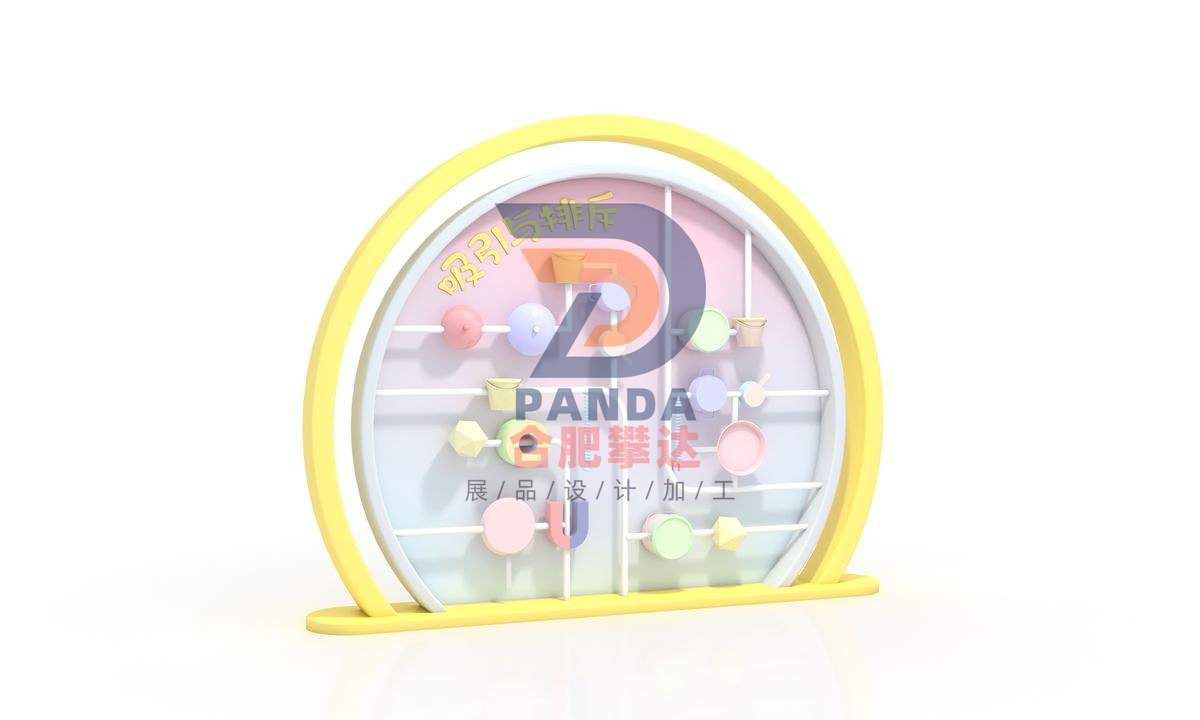
Attract or repel
Kids' Zone · Interactive
- DimensionsSubject to on-site plan
- PresentationInteractive
- PricingQuoted by manufacture spec
Purpose & Scientific Principle
Through hands-on operations, the exhibits educate the audience about the characteristics of materials and magnets, and cultivate their rigorous and serious scientific spirit.
How to Operate
The exhibits consist of display racks, fixed brackets, common items, magnets, etc.
The exhibits consist of a wall filled with common objects in daily life. There are small magnets attached to the wall. You can pick up the magnet and touch the objects on the wall to feel whether the magnet can attract the objects and understand which ones can be attracted and which ones cannot.
Since magnets can attract iron, can they also attract other metals? Our ancestors made many attempts and found that magnets not only cannot attract gold, silver, copper and other metals, but also cannot attract items such as bricks and tiles. During the Western Han Dynasty, people had realized that magnets could only attract iron, but not other items. When two magnets are placed close to each other, they sometimes attract each other and sometimes repel each other. Everyone knows that a magnet has two poles, one is called the N pole and the other is called the S pole. Same-sex poles repel each other, and opposite-sex poles attract each other. People at that time did not know this truth, but they were still aware of this phenomenon.
Related Exhibits

Need a quote for this piece or a full exhibit configuration? Tell us your venue area, theme direction, and budget range.