

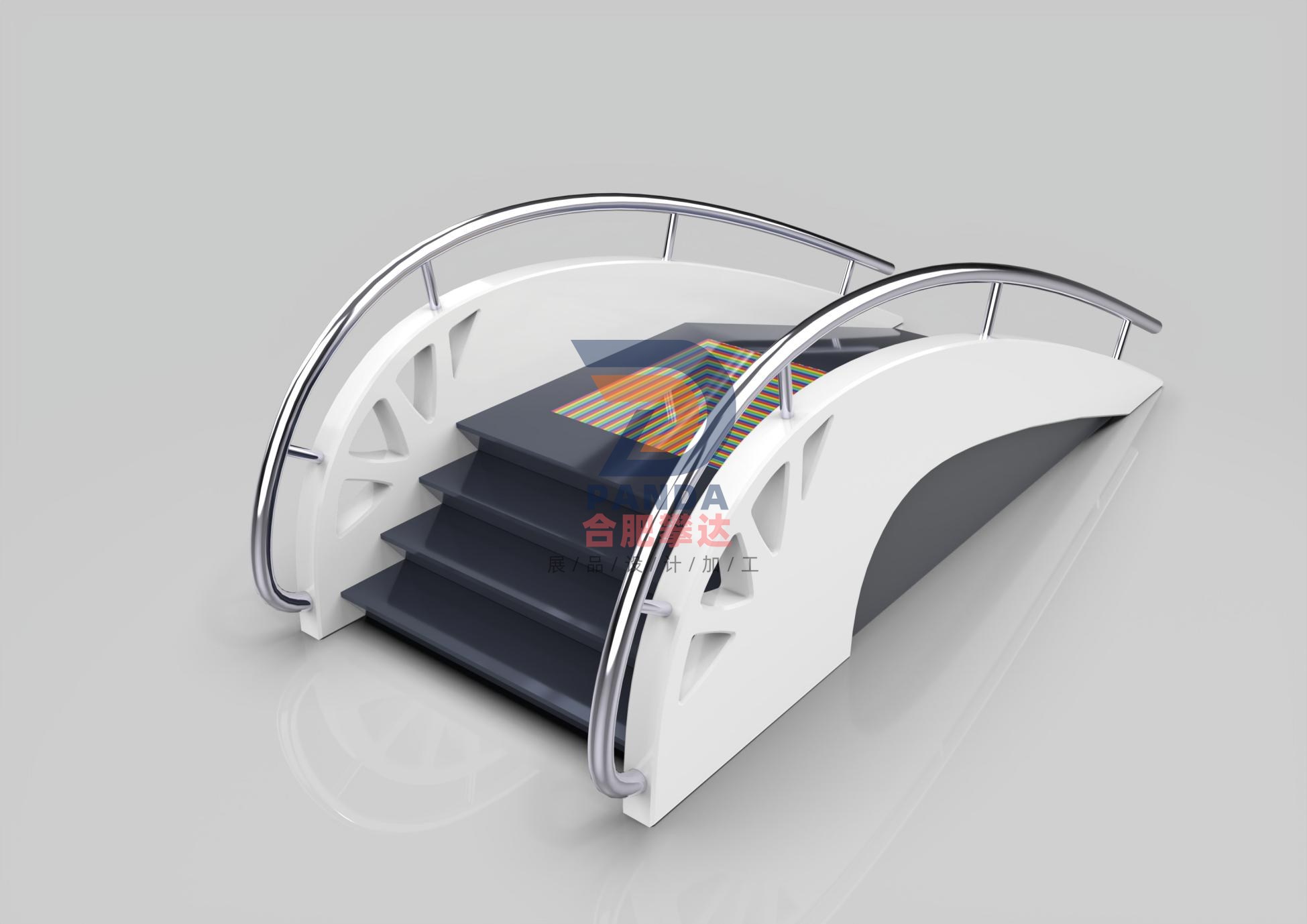
Newton's Rainbow
Optics · Interactive
- DimensionsSubject to on-site plan
- PresentationInteractive
- PricingQuoted by manufacture spec
Purpose & Scientific Principle
Through independent exploration of the dispersion phenomenon of light, we can understand that natural light is synthesized from seven-color light, and understand the method of scientifically confirming theories.
How to Operate
In 1666, Newton performed such an experiment with a prism and found a prism to conduct an experiment on dispersion of sunlight. He recorded: "Cover the room into darkness, make a small hole in the window, and let the sun shine in from the outside. I put the prism in the light, and the refracted light hit the opposite wall. At the beginning, it was a pleasant pastime." Then, he saw a band of light that was five times as wide as before - red, orange, yellow, green, blue, indigo and violet.
He arranged a room as a darkroom, and only opened a small circular hole in the window panel to let in the sunlight. He placed a prism in front of the small hole and immediately saw a bright rainbow-like seven-color band on the opposite wall. The seven colors were arranged from near to far as red, orange, yellow, green, blue, indigo, and violet. Is the white sunlight composed of these seven colors of light?
Newton hypothesized that if white light passes through a prism and changes into seven colors of light due to the interaction between the white light and the prism, then the light of each color must change color again when it passes through the second prism. So he took another triangular prism and placed it behind the first prism, and placed a screen with a small hole between the two prisms. When the first prism was turned, the light of various colors passed through the small hole individually, and the light that came out through the small hole was the light of a single color. Let it pass through the second prism.
The experiment found that the color of the light did not change after passing through the second prism. Obviously, the above statement about the interaction between light and prism changing color is not true. Then Newton began to think that if white light is composed of light of one color, and a prism can decompose white light, then using another prism can also restore the light of these colors to white light. The experiment was successful, and the seven-color light band turned into white light again.
The success of Newton's experiment of decomposing sunlight through a prism laid the foundation for his subsequent optical research. Newton understood the dispersion phenomenon of light passing through a prism and discovered the composition of white light.
Dispersion is the phenomenon in which complex colored light is decomposed into monochromatic light to form a spectrum. Dispersion can be achieved by using instruments such as prisms or gratings that act as dispersion systems. For example, after polychromatic light enters a prism, since it has different refractive indexes for light of various frequencies, the propagation directions of various colored lights are deflected to varying degrees, and thus disperse when leaving the prism, forming monochromatic light.
Related Exhibits

Need a quote for this piece or a full exhibit configuration? Tell us your venue area, theme direction, and budget range.