
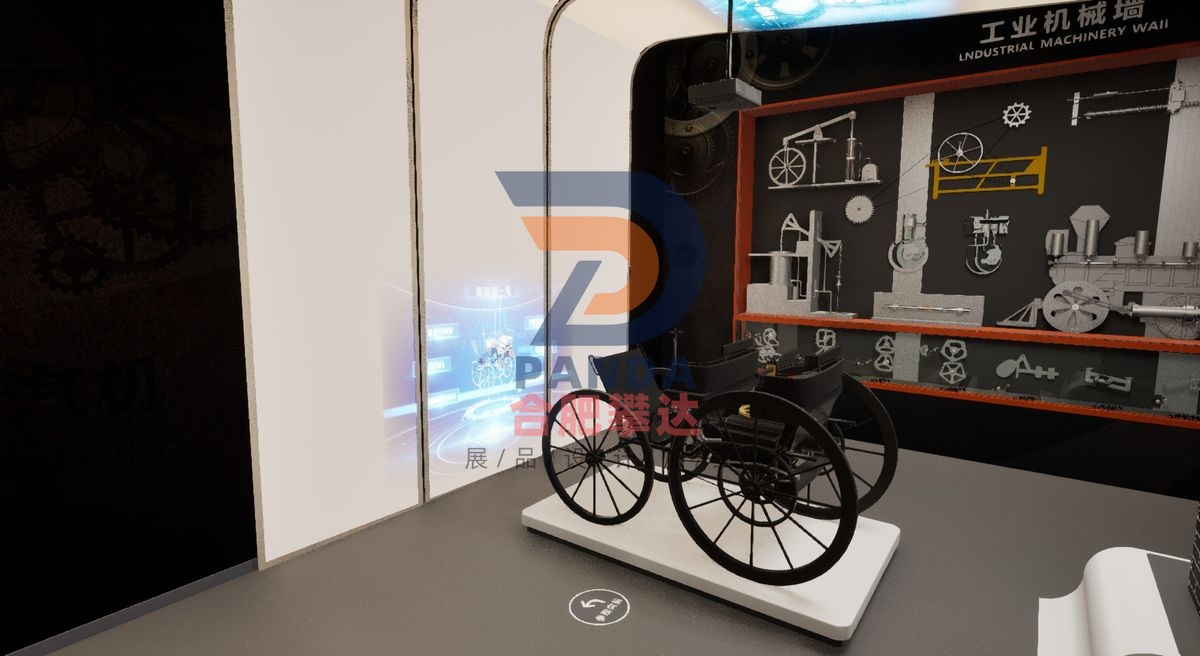
Internal combustion vehicles
Smart Technology · Interactive
- DimensionsSubject to on-site plan
- PresentationInteractive
- PricingQuoted by manufacture spec
Purpose & Scientific Principle
1. Let the audience understand the appearance and structure of internal combustion vehicles represented by Daimler 1.
2. Understand how Daimler One operates.
3. Let the audience understand the convenience that internal combustion vehicles brought to people's travel at that time.
4. Let the audience understand the story of Daimler's development process of Daimler One.
How to Operate
1. The appearance and structure of Daimler One;
2. How Daimler One operates;
3. The social environment when the internal combustion automobile was invented.
1886, Gottlieb. Daimler developed the Daimler 1 four-wheel car. This is a car with a 1.1-horsepower engine developed by himself installed on a horse-drawn carriage body, retaining the obvious shadow of a horse-drawn carriage. The arrangement of seats, suspension structure, body carrying method, lights, etc. all maintain the original horse-drawn carriage prototype. The car can reach a top speed of 14 kilometers per hour and is called a horseless carriage.
1886, Gottlieb. Daimler developed the Daimler 1 four-wheel car. This is a car with a 1.1-horsepower engine developed by himself installed on a horse-drawn carriage body, retaining the obvious shadow of a horse-drawn carriage. The arrangement of seats, suspension structure, body carrying method, lights, etc. all maintain the original horse-drawn carriage prototype. The car can reach a top speed of 14 kilometers per hour and is called a horseless carriage.
Related Exhibits




Need a quote for this piece or a full exhibit configuration? Tell us your venue area, theme direction, and budget range.