
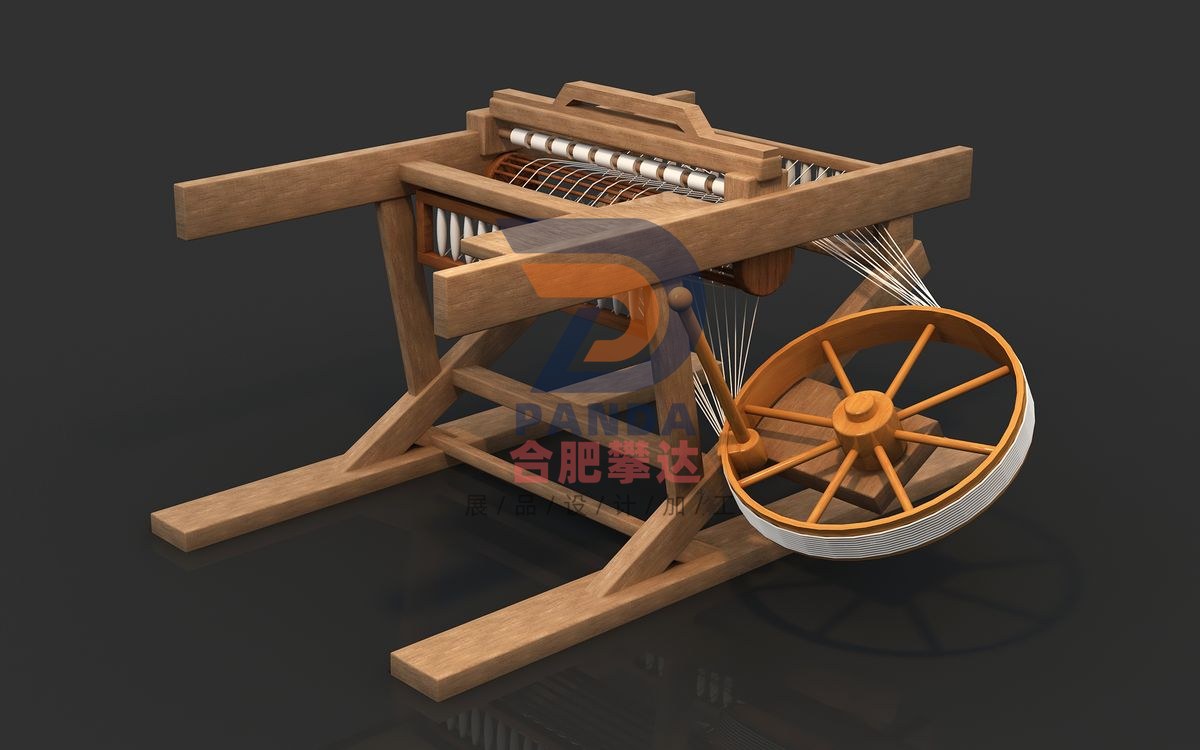
Spinning Jenny
Smart Technology · Interactive
- DimensionsSubject to on-site plan
- PresentationInteractive
- PricingQuoted by manufacture spec
Purpose & Scientific Principle
Spinning Jenny greatly promoted the process of the industrial revolution. Its emergence improved production efficiency and began to change the way of production. Through the display of the Spinning Jenny, the audience can understand the progressive significance of the Spinning Jenny, understand the working process and principles of the Spinning Jenny, understand the background of the times, and realize that it truly opened the chapter of the Industrial Revolution from the perspective of social production practice.
How to Operate
Working principle and significance: In 1765, James Hargreaves invented the spinning jenny (which kicked off the industrial revolution). It was named after his daughter. The spinning jenny increased the number of yarn spindles to 8 and later to 16, increasing the spinning efficiency by 16 times. In 1768, Hargreaves obtained a patent for the spinning jenny; by 1784, the number of "jenny machines" had increased to 80 spindles, and the efficiency had increased to 80 times. Four years later there were 20,000 "Jennys" in Britain. During this period, a large number of factories in the United Kingdom and other European countries used child labor to spin and weave cloth, and expanded cotton cultivation and predatory trade in colonial areas. Cotton was continuously brought in, cotton cloth was exported, and the demand for spindles and cotton cloth continued to increase. In 1769, Richard Arkwright invented a water-powered spinning machine, which could install 200 spindles. In 1771, he established the first water-powered spinning mill. This marked the birth of the current factory, when it was common for spinning machines to be equipped with 200 spindles spinning simultaneously.
Era background and influence: In the 15th century, Europe began the Age of Discovery and the Age of Global Colonization. In 1600, Britain established the East India Company in India, and cotton imports expanded astonishingly. In the next 100 years, the amount of cotton exported by Britain increased 70 times, and cotton imports began to impact British domestic wool textiles. In 1733, the British watchmaker John Kay improved the hand-thrown shuttle drive of the loom into a flying shuttle, which greatly improved the efficiency of weaving. After that, the supply of spinning yarn was insufficient, and the price of spindles began to rise. Spinning became a bottleneck, and the supply of cotton yarn exceeded demand, resulting in an extremely serious yarn shortage. In this context, the emergence of the spinning jenny was of cross-epochal significance, as it opened the prelude to the industrial revolution.
In 1600, Britain established the East India Company in India, and cotton imports expanded astonishingly. In the next 100 years, the amount of cotton exported by Britain increased 70 times, and cotton imports began to impact British domestic wool textiles. In 1733, the British watchmaker John Kay improved the hand-thrown shuttle drive of the loom into a flying shuttle, which greatly improved the efficiency of weaving. After that, the supply of spinning yarn was insufficient, and the price of spindles began to rise. Spinning became a bottleneck, and the supply of cotton yarn exceeded demand, resulting in an extremely serious yarn shortage. In this context, the emergence of the spinning jenny was of cross-epochal significance, as it opened the prelude to the industrial revolution.
Related Exhibits




Need a quote for this piece or a full exhibit configuration? Tell us your venue area, theme direction, and budget range.