

Interference and Diffraction of Waves
Optics · Interactive
- DimensionsSubject to on-site plan
- PresentationInteractive
- PricingQuoted by manufacture spec
Purpose & Scientific Principle
The interference and diffraction of water waves are used to demonstrate the phenomena of light interference and diffraction, allowing the audience to observe and understand the principles of light interference and diffraction.
How to Operate
1. Interference of light
Thomas Young used the superposition principle of waves to explain the interference phenomenon of light well. Assuming that light is a wave that propagates some kind of vibration, then the light wave emitted from the linear light source S at any time will be transmitted to the two slits S1 and S2 in front at the same time. These two slits become two total vibration situations. are the same wave source, as shown in Figure (b). The waves emitted from them are superimposed on the screen. Where the wave crests overlap and the wave troughs overlap, the light strengthens each other; where the wave crests overlap or the wave troughs overlap, the light cancels or weakens each other, thus forming alternating light and dark stripes.
This happens when two or more light waves meet and superimpose under certain conditions, causing the redistribution of light intensity, thus forming a stable and uneven light intensity distribution in the superposition area, with alternating light and dark or colored stripes appearing. This phenomenon is called interference of light.
2. Diffraction of light
Diffraction is a propagation behavior common to all waves. It refers to the phenomenon that when light encounters an obstacle or a small hole during propagation, the light will deviate from the straight path of propagation and propagate behind the obstacle. Diffraction of light and interference of light prove that light is wavelike.
In 1655, Grimaldi, a professor of mathematics at the University of Bologna in Italy, first discovered the diffraction phenomenon of light when observing the shadow of a small stick placed in a light beam. After experiments, he concluded that light is a fluid that can move in waves, and the different colors of light are the result of different wave frequencies.
Grima was the first to propose the concept of "diffraction of light" and was the earliest advocate of the wave theory of light.
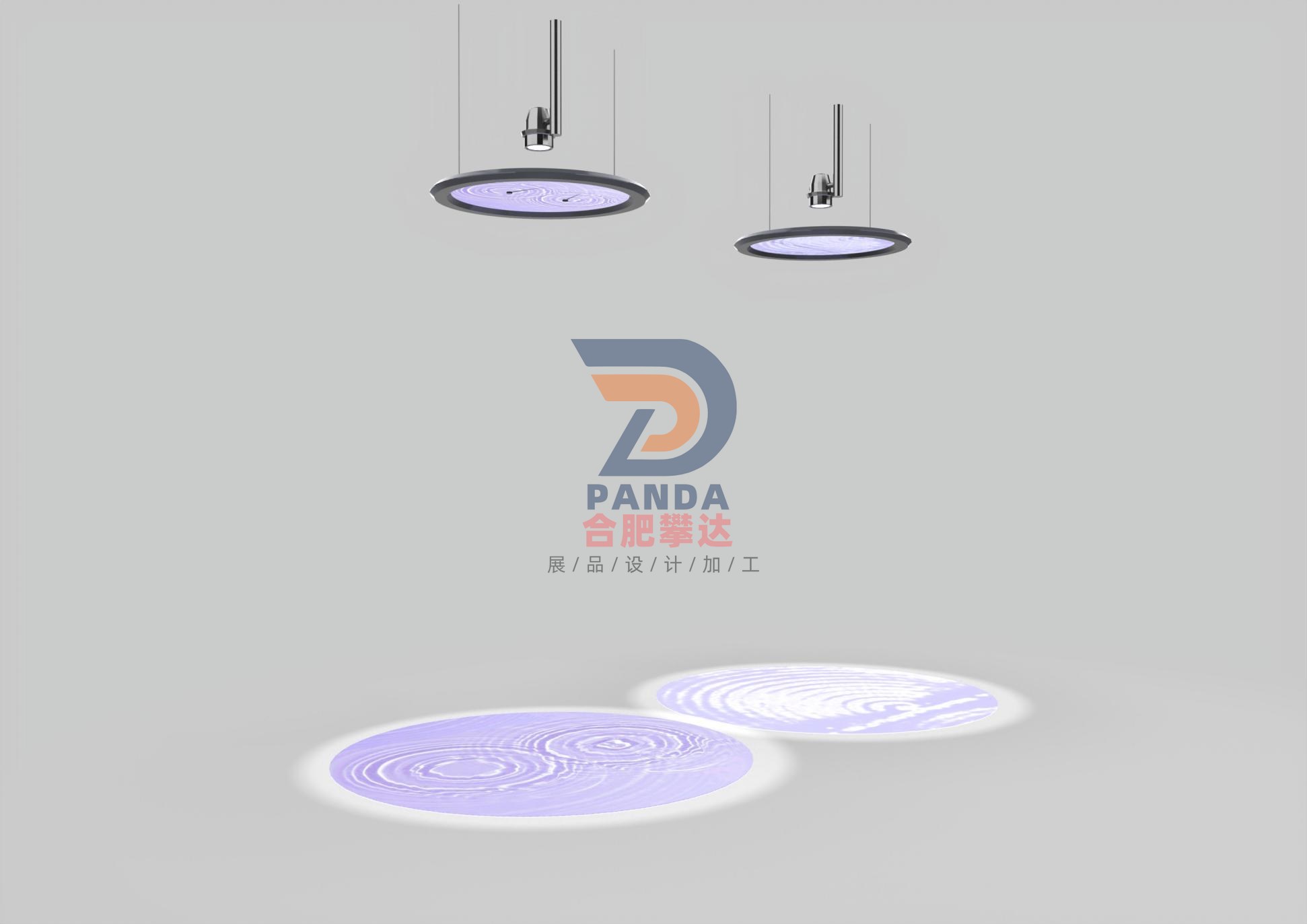
In 1801, British physicist Thomas Young successfully observed the interference of light in the laboratory. Thomas Young projected a beam of light onto a screen with a hole, and the hole became a "point light source." After the light comes out of the small hole, it hits the two small holes of the second screen. The two small holes are very close (about 0.1mm) and the distance from the previous small hole is equal. In the experiment, Thomas Young used slits instead of small holes to conduct the experiment as shown in Figure (a), which produced alternating light and dark colored stripes on the light screen. The exhibit uses the form of water waves to demonstrate the concepts of interference and diffraction.
Related Exhibits

Need a quote for this piece or a full exhibit configuration? Tell us your venue area, theme direction, and budget range.