
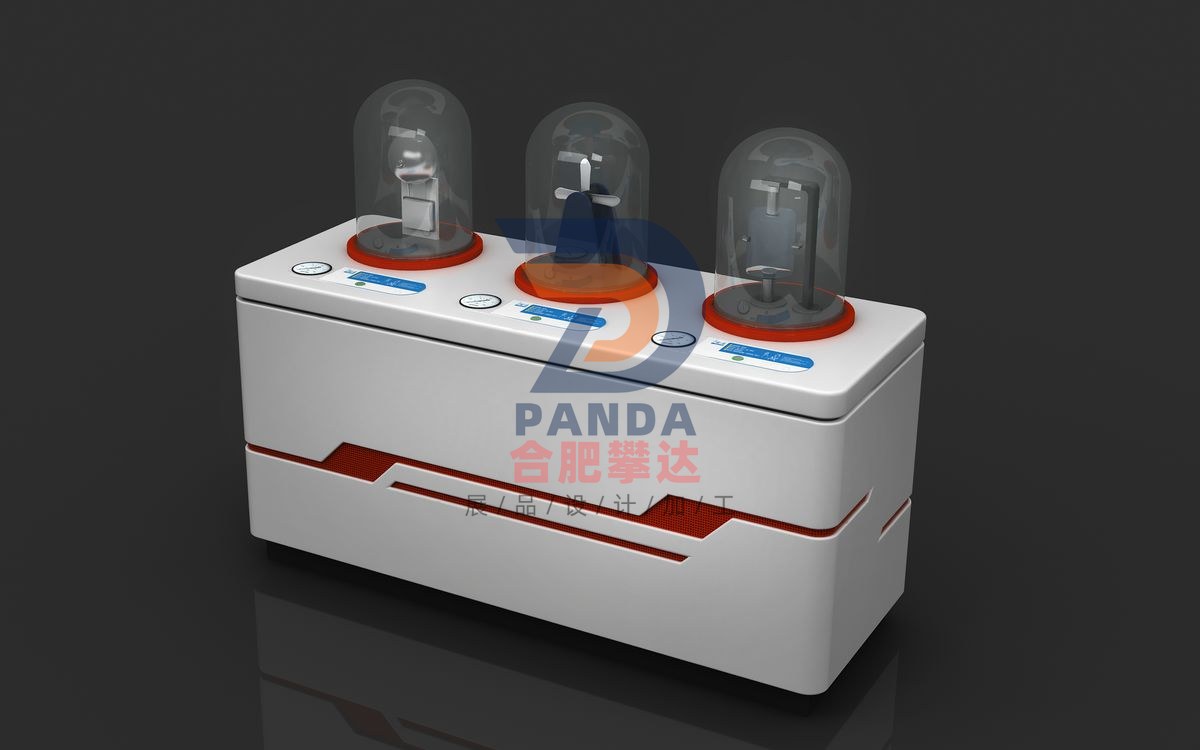
Discovery of Vacuum
Mechanics in Motion · Interactive
- DimensionsSubject to on-site plan
- PresentationInteractive
- PricingQuoted by manufacture spec
Purpose & Scientific Principle
"Discovery of Vacuum", as the first exhibit in this exhibition area, starts from Torricelli's discovery of vacuum, and allows the audience to understand the important theoretical basis of the invention of the steam engine through scientists' explanation of the discovery of pressure and pressure. As an important driving force for entering the industrial age, the display of this process allows the audience to travel back to the starting point of the Industrial Revolution, understand the story of pioneer scientists' discovery of pressure and pressure, and start a unique journey of exploration.
How to Operate
Discovery process: In 1643, Galileo's student Toricio conducted an experiment using mercury instead of water: a 1-meter-long glass tube filled with mercury was inserted upside down in a mercury tank. After a period of time, the mercury in the mercury column dropped to 760mm, and a vacuum environment of up to 240mm was formed above the glass tube. At this point, Torricelli successfully created a vacuum in a glass tube, thereby proving that air has weight and discovered air pressure.
2. Concept and definition: Vacuum refers to the state of gas in a given space with a pressure lower than one atmosphere. It is a physical phenomenon. In a "vacuum", sound cannot be transmitted because there is no air medium; the windmill cannot create a pressure difference and therefore cannot rotate.
3. Impact and subsequent development: Torricelli’s experimental results spread across the Alps to Northern Europe, arousing strong interest among scientists from various countries. In the UK, scientist Boyle conducted a scientific analysis of air pressure and proposed the famous Boyle's law in 1662: the pressure of an ideal gas is inversely proportional to its volume. At this point, people have a relatively scientific understanding of the pressure properties of air and even all gases.
Vacuum refers to the state of a gas below one atmospheric pressure in a given space. It is a physical phenomenon. In a "vacuum", sound cannot be transmitted because there is no air medium; the windmill cannot form a pressure difference and cannot rotate. The above principles are used to set up exhibits to reflect the scientific knowledge of the material composition of air and air pressure.
Related Exhibits
Need a quote for this piece or a full exhibit configuration? Tell us your venue area, theme direction, and budget range.