
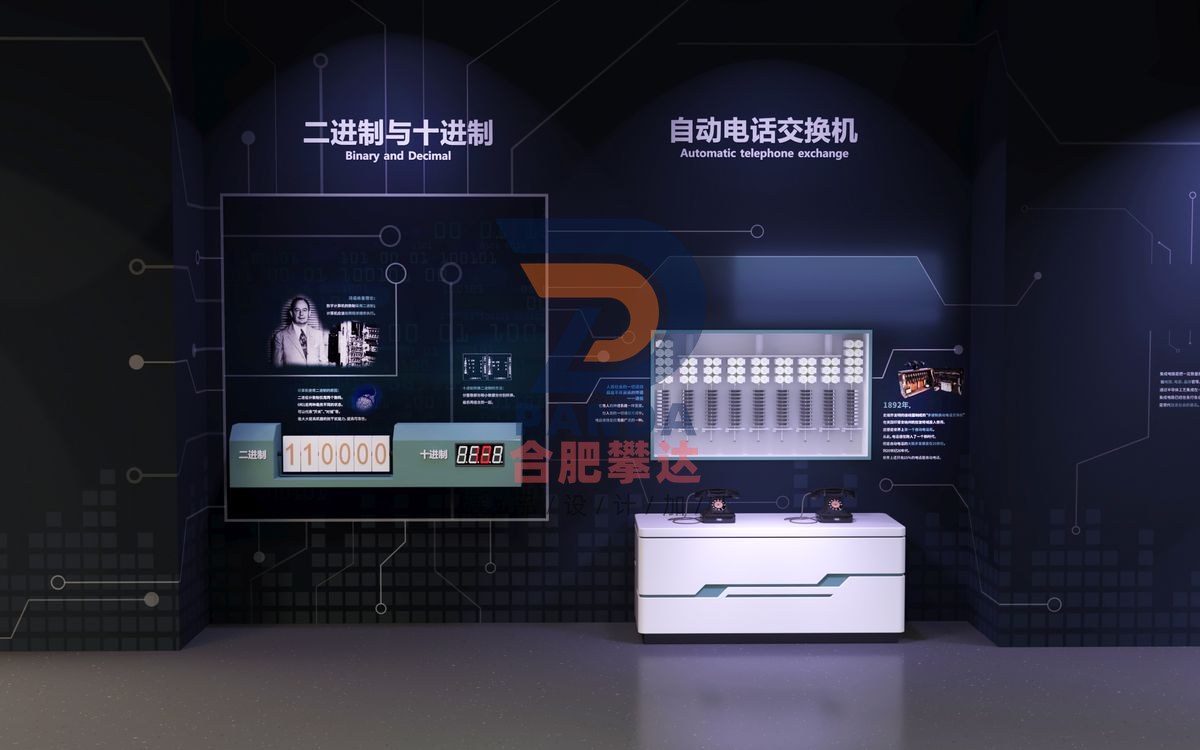
Automatic telephone exchange
Electromagnetism · Interactive
- DimensionsSubject to on-site plan
- PresentationInteractive
- PricingQuoted by manufacture spec
Purpose & Scientific Principle
Modern people can communicate with others anytime and anywhere, but in the past, telephone communication had to go through several steps. By allowing the audience to experience the past telephone communication methods, they can feel the process of old-fashioned telephone communication.
How to Operate
In 1892, the "stepping automatic telephone exchange" made of the switch invented by St. Joe was put into use in LaPorte City, Indiana, USA. This was the world's first automatic telephone exchange. Since then, telephone communication has entered a new era. But the big step in the development of automatic telephones came in the 20th century. By the 1920s, only 15% of the world's telephone calls were automated. With the development and progress of automatic telephone technology, by the 1950s, 77% of the world's telephone calls were automatic telephones.
Stepper telephone operating steps and processes:
It relies on the user's dialing pulse to directly control the mechanical action of the switch step by step. For example, the user dials "1" and sends out a pulse (the so-called "pulse" is a short-term current). This pulse causes the electromagnet in the connector to actuate once, and the connector moves forward one step. When the user dials the number "2", two pulses are sent out, causing the electromagnet to actuate twice, and the connector moves forward two steps, and so on.
In 1892, the "stepping automatic telephone exchange" made of the switch invented by St. Joe was put into use in LaPorte City, Indiana, USA. This was the world's first automatic telephone exchange. Since then, telephone communication has entered a new era.
Related Exhibits
Need a quote for this piece or a full exhibit configuration? Tell us your venue area, theme direction, and budget range.