
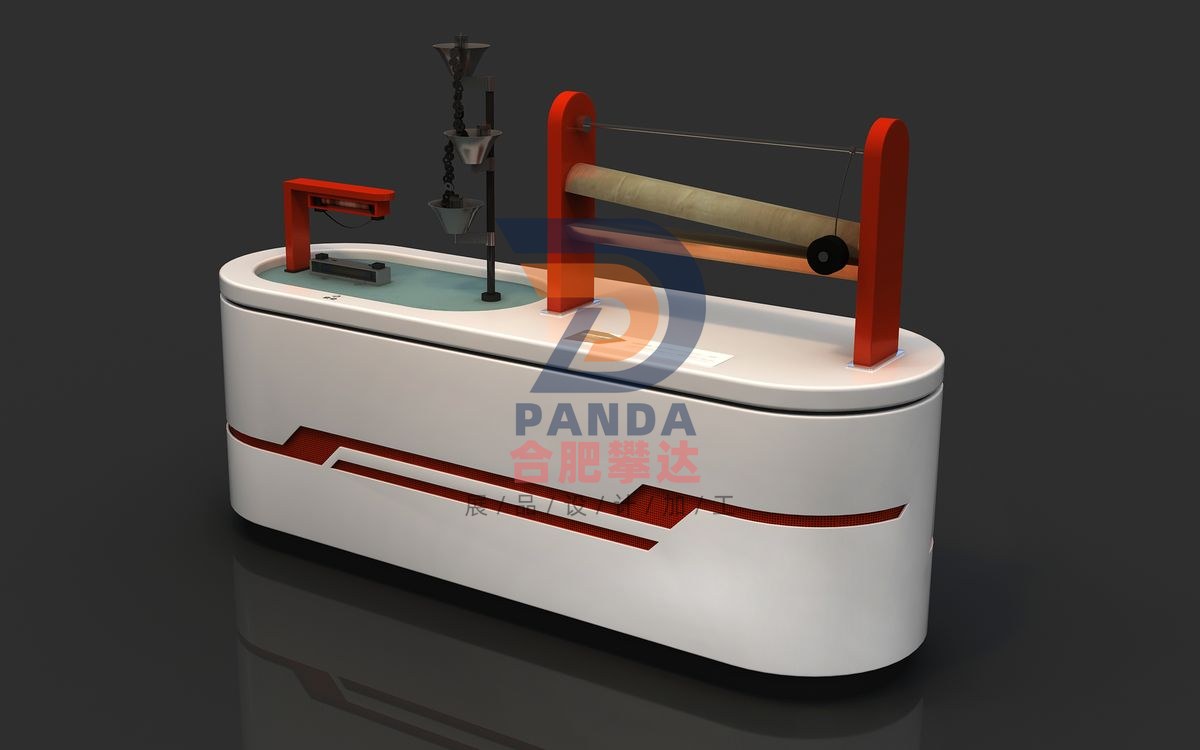
Iron Nail Bridge
Electromagnetism · Interactive
- DimensionsSubject to on-site plan
- PresentationInteractive
- PricingQuoted by manufacture spec
Purpose & Scientific Principle
The purpose is to allow the audience to magnetize the iron nails through the magnetic field generated by the energized coil, and then connect the magnetized iron nails one by one to form a "bridge" shape, while thinking about the principle of electromagnetic conversion in the process.
How to Operate
If a current flows through a straight metal wire, a circular magnetic field will be generated in the space around the wire. The greater the current flowing in the wire, the stronger the magnetic field produced. The magnetic field is circular and surrounds the wire. A long metal wire is wound around a hollow cylinder in one direction to form an object called an electromagnet. The magnetic field lines outside the electromagnet originate from the north pole of the electromagnet and return to the south pole. However, the direction of the magnetic field inside the electromagnet is from the south pole to the north pole. The electromagnet is externally equivalent to a bar magnet. The magnetic field outside the electromagnet is similar to that of a bar magnet.
Why do small iron nails attract each other to form a "bridge deck"?
The "piers" on both sides are iron cores with coils wound on the surface, which are electromagnets. When current flows through it, it becomes magnetic like a magnet, and the magnetism disappears when the power is turned off. The "piers" are not magnetic, but energizing the coil will make the iron core in the center magnetic. At this time, when the small iron nail is close to the "bridge pier", it will be attracted to it and become magnetic. Because magnetism has the characteristics of like poles repelling each other and opposite poles attracting each other, iron nails can be connected end to end between two "bridge piers" to form a "bridge deck". The phenomenon that these originally non-magnetic iron cores and iron nails become magnetic under the action of a magnetic field is called magnetization.
Electromagnets have many applications in life: install the electromagnet on a crane, energize it and pick up a large amount of steel. After moving to another position, cut off the current and put the steel down. This achieves the movement of a large amount of iron-containing materials. Large electromagnetic cranes can lift several tons of steel at a time, which greatly improves work efficiency.
If a current is passed through a straight metal wire, a circular magnetic field will be generated in the space around the wire. The greater the current flowing in the wire, the stronger the magnetic field produced. The magnetic field is circular and surrounds the wire. A long metal wire is wound around a hollow cylinder in one direction to form an object called an electromagnet. The magnetic field lines outside the electromagnet originate from the north pole of the electromagnet and return to the south pole. However, the direction of the magnetic field inside the electromagnet is from the south pole to the north pole. The electromagnet is externally equivalent to a bar magnet. The magnetic field outside the electromagnet is similar to that of a bar magnet.
Related Exhibits
Need a quote for this piece or a full exhibit configuration? Tell us your venue area, theme direction, and budget range.