
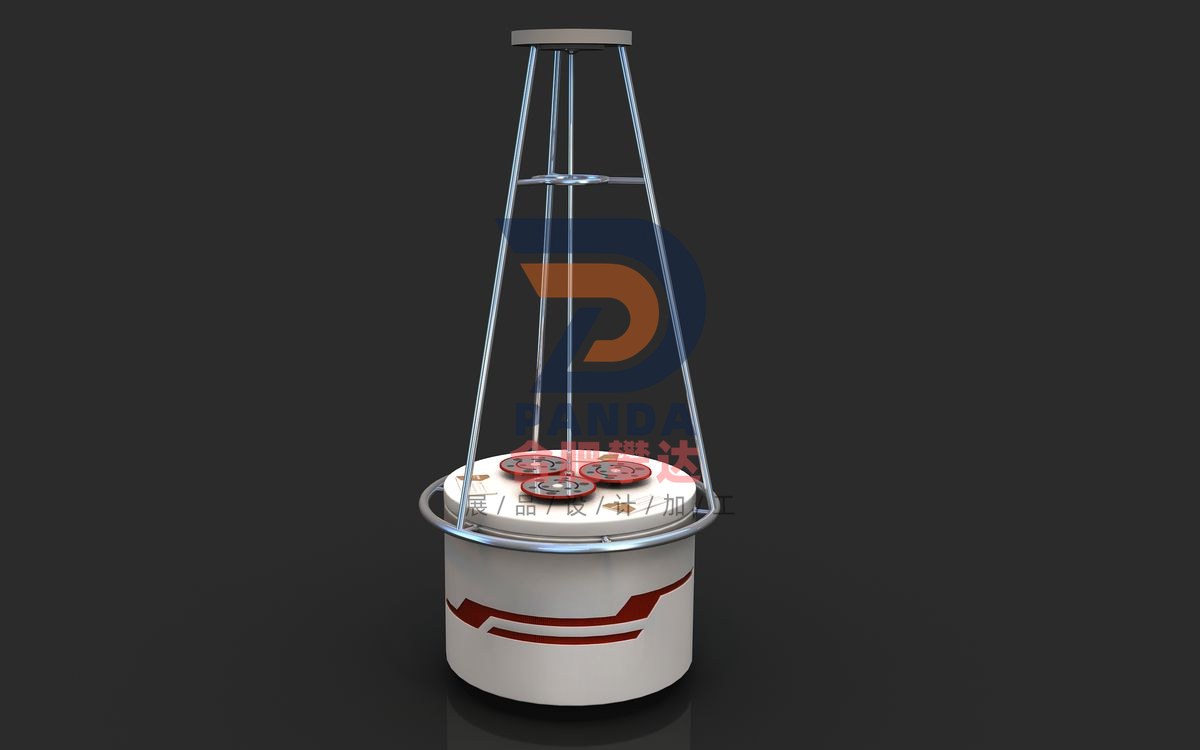
Magnetic Interference Pendulum
Electromagnetism · Interactive
- DimensionsSubject to on-site plan
- PresentationInteractive
- PricingQuoted by manufacture spec
Purpose & Scientific Principle
Observe the trajectory of the pendulum and think about the principle of magnetism with like poles repelling each other and opposite poles attracting each other.
How to Operate
1. The concept of magnet
Generally defined as objects that can attract substances such as iron, cobalt, and nickel.
2. Classification of magnets
Magnets are generally divided into permanent magnets and soft magnets. Permanent magnet: A magnet that can maintain its magnetism for a long time. Permanent magnet is a hard magnet that is not easy to lose magnetism and is not easy to be magnetized. Soft magnet: As the material of magnetic conductors and electromagnets, the polarity of soft magnets changes with the polarity of the applied magnetic field.
3. Properties of magnets
The magnet has two polarities, the magnetic north pole is N, and the magnetic south pole is S. After cutting off, it still has two poles, N and S. A single magnetic pole cannot exist. At the same time, magnets are directional. If you hang a magnet, you will find that its south pole points to the "left" right of the geographical south pole, and its north pole points to the "left" right of the geographical north pole.
4. The role of magnets
There is an interaction between magnetic poles. Magnetic poles with the same name repel each other and magnetic poles with different names attract each other. There is a substance around the magnet that can deflect the magnetic needle. This substance is called a magnetic field in physics. The distribution of magnetic field is usually represented by magnetic field lines.
Every magnet has positive and negative poles. There is a magnetic field around the magnet. When the same poles of two magnets are close to each other, due to the mutual repulsion of the magnetic field, the two magnets are like a force pulling them apart. When two different poles are close, they will attract. Simply put, magnet repulsion is caused by the magnetic field in the magnet. This is what is said in physics that like poles repel and opposite poles attract.
Related Exhibits




Need a quote for this piece or a full exhibit configuration? Tell us your venue area, theme direction, and budget range.