

Magdeburg Hemisphere Experiment
Mechanics in Motion · Interactive
- DimensionsSubject to on-site plan
- PresentationInteractive
- PricingQuoted by manufacture spec
Purpose & Scientific Principle
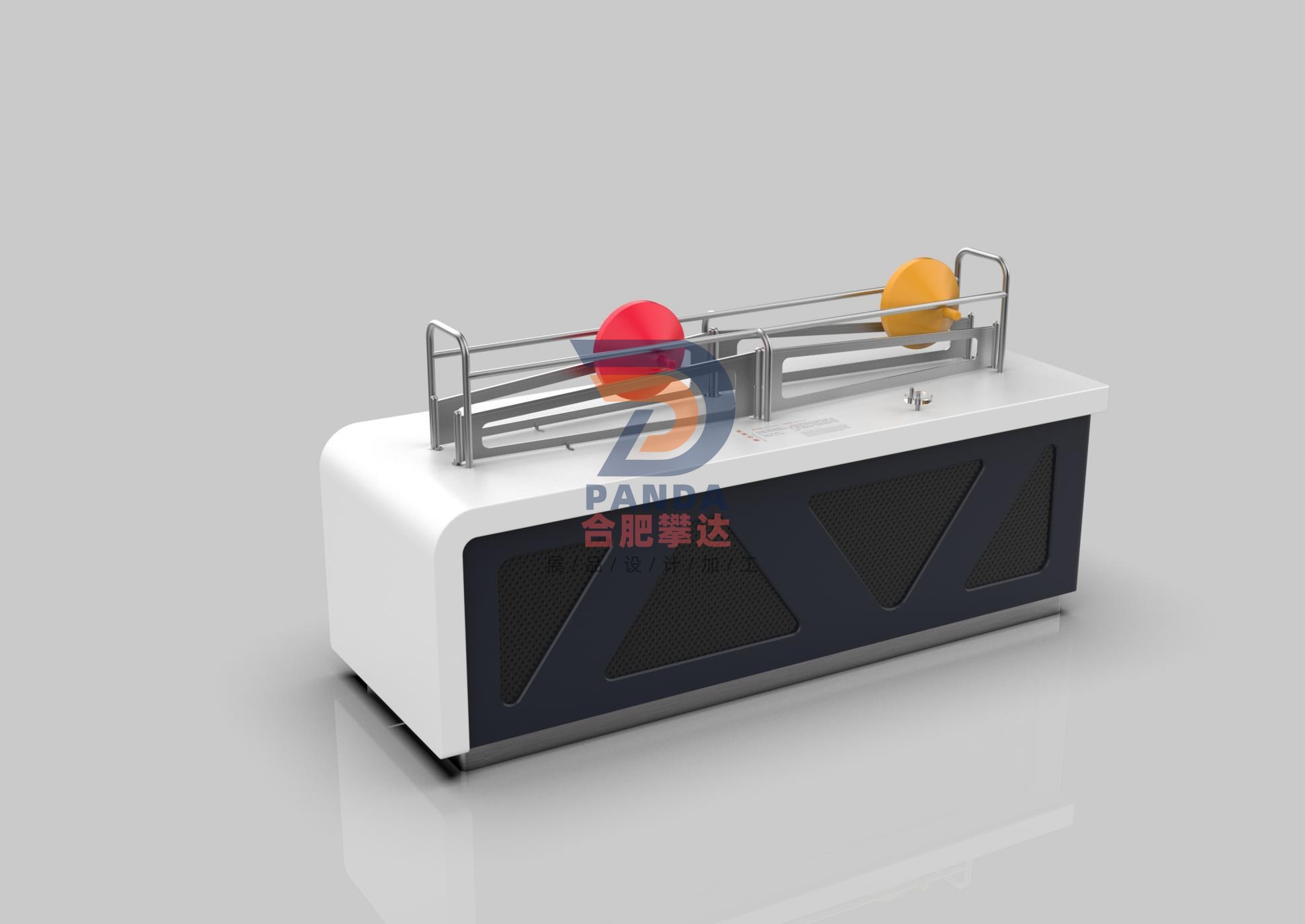
Shows Glick’s experimental process and background story through pictures and texts, restores the Magdeburg Hemisphere Experiment, and allows the audience to understand the verification process of the existence of atmospheric pressure through practice combined with pictures and texts, and further understand the importance of Torricelli’s discovery of vacuum and air pressure.
How to Operate
1. Background story: The Magdeburg Hemisphere was a scientific experiment conducted by Magdeburg Mayor von Guericke in Regensburg (today's Regensburg, Germany) in the Roman Empire in 1654. The purpose was to prove the existence of atmospheric pressure. This experiment was called the "Magdeburg Hemisphere" experiment. In 1654, Magdeburg Mayor Glick heard about Torricelli's experiment and heard that many people did not believe in atmospheric pressure. Therefore, he decided to use the experiment to avenge Torricelli's injustice.
2. Experimental process: Magdeburg Mayor Glick and his assistant used a homemade piston vacuum pump to evacuate two closely fitting copper hemispheres, and used 4 grooms and 8 horses to pull the ball apart. Even though people kept shouting for help, they could not pull it apart. After switching to 8 grooms and 16 horses, they exerted a lot of force, and only heard a "bang", and the steel ball was pulled apart.
Significance: It proves that vacuum and atmospheric pressure really exist. The pressure difference inside and outside the copper ball makes it difficult to pull the ball apart. It is this experiment that allows scientists from various countries to invest in the exploration of the vacuum field.
Barometric pressure is the abbreviation of atmospheric pressure. It is the atmospheric pressure acting on a unit area, which is equal to the weight of a vertical air column extending upward to the upper boundary of the atmosphere per unit area. The size of air pressure is related to conditions such as altitude and temperature. Generally decreases with height. In the horizontal direction, differences in atmospheric pressure cause the flow of air. The unit used to express air pressure is the height of the mercury column. For example, a standard atmospheric pressure is equal to the pressure generated by a 760 mm high mercury column, which is equivalent to the atmospheric pressure of 1.0336 kilograms on a square centimeter area. Internationally, it is uniformly stipulated that "hectopascal" is used as the unit of air pressure. After conversion: one standard atmospheric pressure = 101300 Pa (millibar). The Magdeburg Hemisphere Experiment really vividly demonstrated to the public the existence of atmospheric pressure.
Related Exhibits
Need a quote for this piece or a full exhibit configuration? Tell us your venue area, theme direction, and budget range.