

Conic Sections
Mathematics · Interactive
- DimensionsSubject to on-site plan
- PresentationInteractive
- PricingQuoted by manufacture spec
Purpose & Scientific Principle
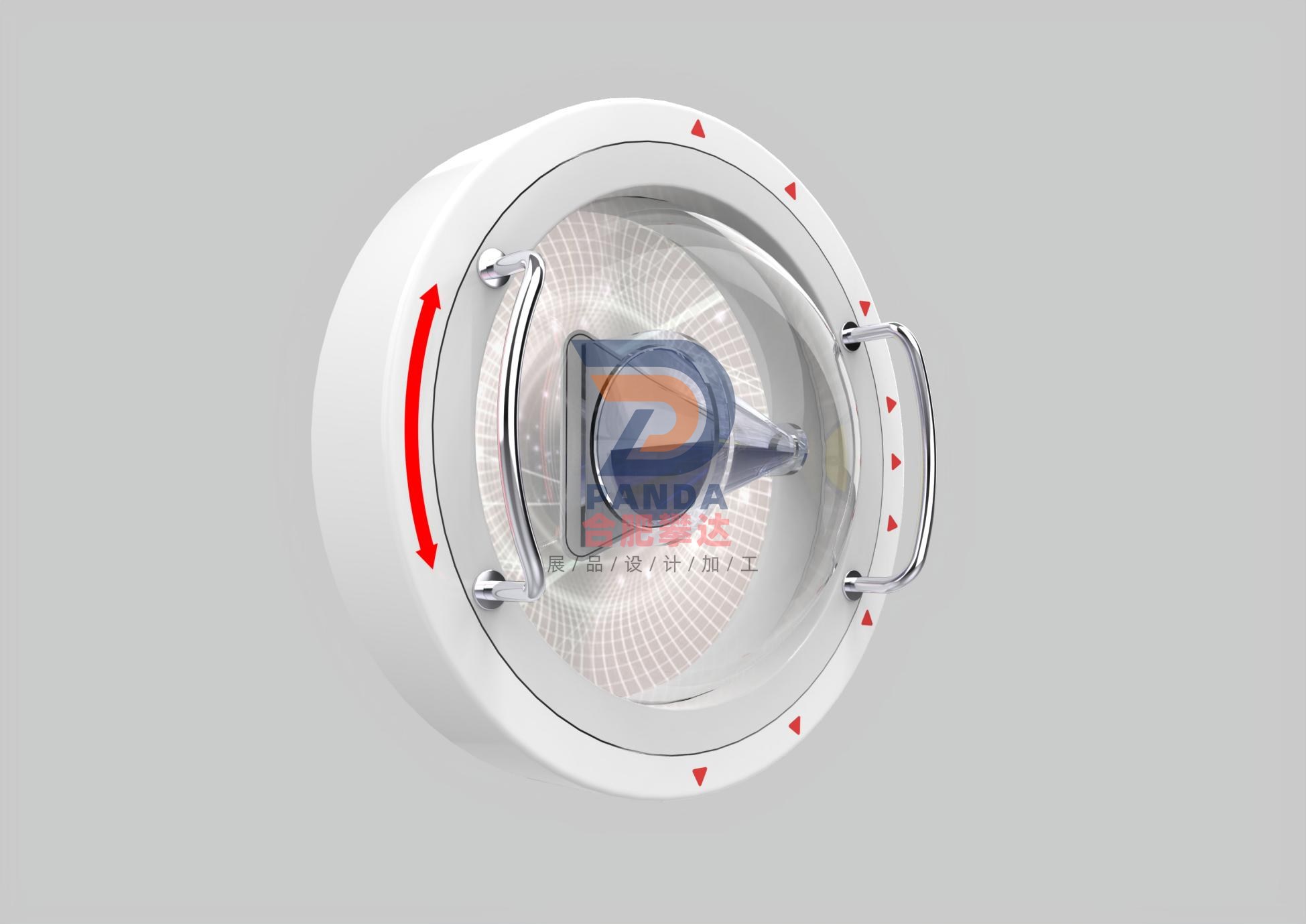
The exhibition uses simple interactive devices to interpret various conic sections discovered by Apollonius.
How to Operate
A conic section is a curve obtained by cutting a quadratic cone through a plane. Conic sections include ellipses (circles are special cases of ellipses), parabolas, and hyperbolas. The ancient Greek mathematician Apollonius used the method of cutting a cone with a plane to study these curves. If you truncate the cone with a plane perpendicular to the axis of the cone, you will get a circle; if you gradually tilt the plane, you will get an ellipse; when the plane is tilted until it is parallel to "and only" one of the generatrix of the cone, you will get a parabola; if you truncate it with a plane parallel to the axis of the cone, you will get a branch of the hyperbola (when the cone surface is replaced by the corresponding quadratic cone surface, you can get the hyperbola).
A conic section is a curve obtained by cutting a quadratic cone through a plane. Conic sections include ellipses (circles are special cases of ellipses), parabolas, and hyperbolas. The ancient Greek mathematician Apollonius used the method of cutting a cone with a plane to study these curves. If you cut the cone with a plane perpendicular to the axis of the cone, you will get a circle; if you gradually tilt the plane, you will get an ellipse; if the plane is tilted until it is parallel to "and only" one of the generatrix of the cone, you will get a parabola; if you cut it with a plane parallel to the axis of the cone, you will get a branch of the hyperbola (when you replace the cone surface with the corresponding quadratic cone surface, you will get a hyperbola)
Related Exhibits




Need a quote for this piece or a full exhibit configuration? Tell us your venue area, theme direction, and budget range.