
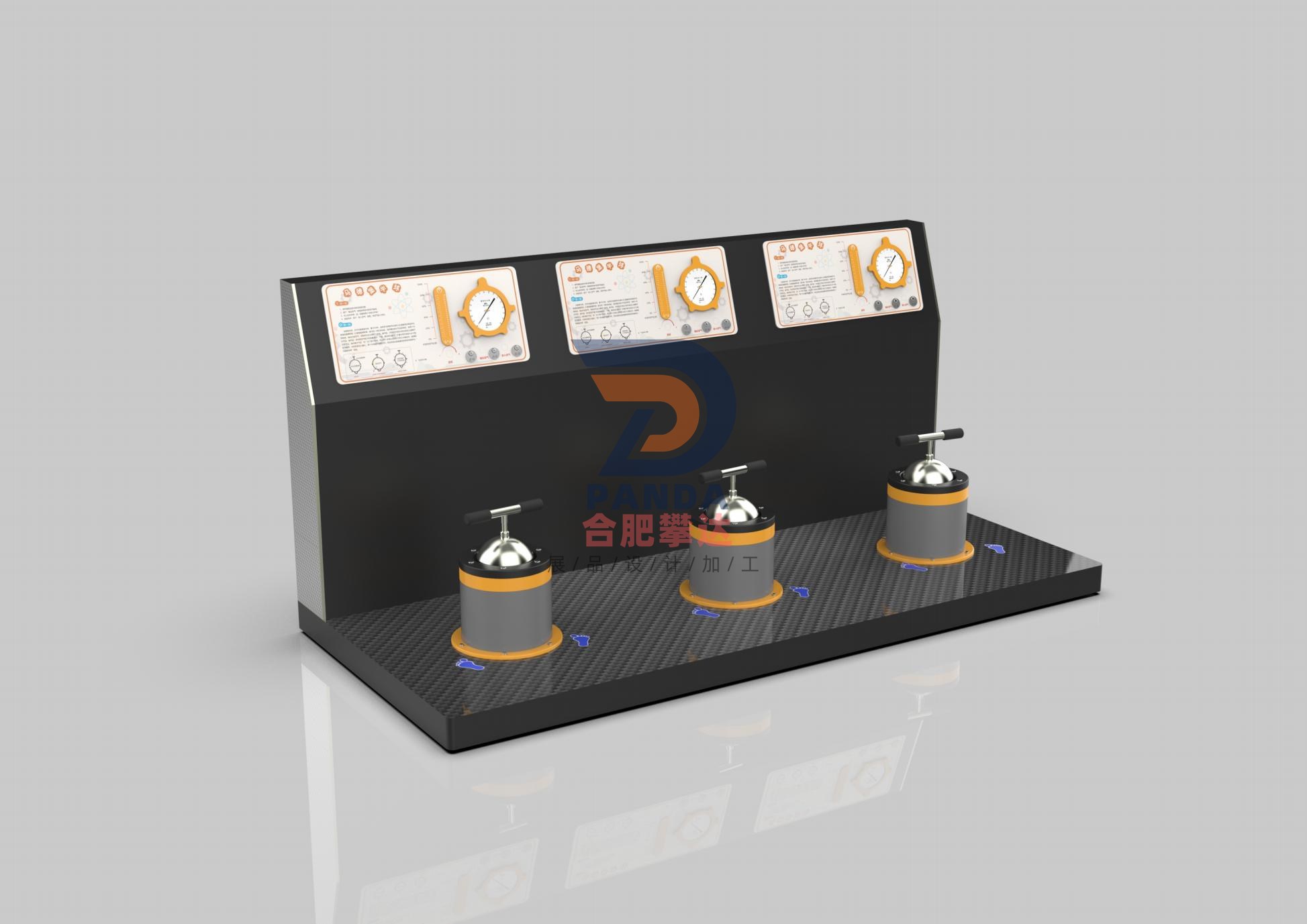
Magdeburg Hemisphere
Mechanics in Motion · Electromechanical Interaction
- Dimensions2600×1500×1200mm
- PresentationElectromechanical Interaction
- PricingQuoted by manufacture spec
Purpose & Scientific Principle
The Magdeburg Hemisphere, also known as the Magdeburg Hemisphere, was a scientific experiment conducted in 1654 by Otto von Guericke, the mayor of Magdeburg at the time, in Regensburg (today's Regensburg, Germany) in the Holy Roman Empire. The purpose was to prove the existence of atmospheric pressure, evacuate the air in the ball, and the surrounding atmosphere pressed the two hemispheres tightly together. This experiment was also called the "Magdeburg Hemisphere" experiment because of Glick's job title. The atmosphere will exert pressure on objects in it from all directions, which is called atmospheric pressure. Atmospheric pressure is simply called atmospheric pressure. Air pressure is the atmospheric pressure acting on a unit area, which is numerically equal to the gravity on a vertical air column extending upward to the upper boundary of the atmosphere per unit area. Atmospheric pressure not only changes with altitude, but is not fixed at the same location. The atmospheric pressure of 1.01325×10^5 Pa is usually called the standard atmospheric pressure. It is approximately equivalent to the pressure generated by a 760mm mercury column. Standard atmospheric pressure can also be called 760mm mercury column atmospheric pressure. Characteristics (1) Atmospheric pressure decreases with increasing altitude (2) When the temperature remains constant, the smaller the volume of a certain mass of gas, the greater the pressure; the larger the volume, the smaller the pressure (3) The boiling point of all liquids decreases when the air pressure decreases and increases when the air pressure increases (4) In gases and liquids, the pressure is smaller where the flow rate is higher
How to Operate
Set up three Magdeburg hemisphere interactive experimental devices of different sizes on the platform (pressure is adjustable). Before the interaction starts, you can easily pull the combined Magdeburg hemisphere apart and press the start button. It will be difficult to pull the hemisphere apart after the gas in the sphere is removed. You can try to pull the hemisphere under how much pressure you can according to the pressure gauge.
Pull the Magdeburg hemisphere apart before and after pressing the start button. According to the pressure gauge, see how much pressure you can pull apart the hemisphere.
Related Exhibits
Need a quote for this piece or a full exhibit configuration? Tell us your venue area, theme direction, and budget range.