
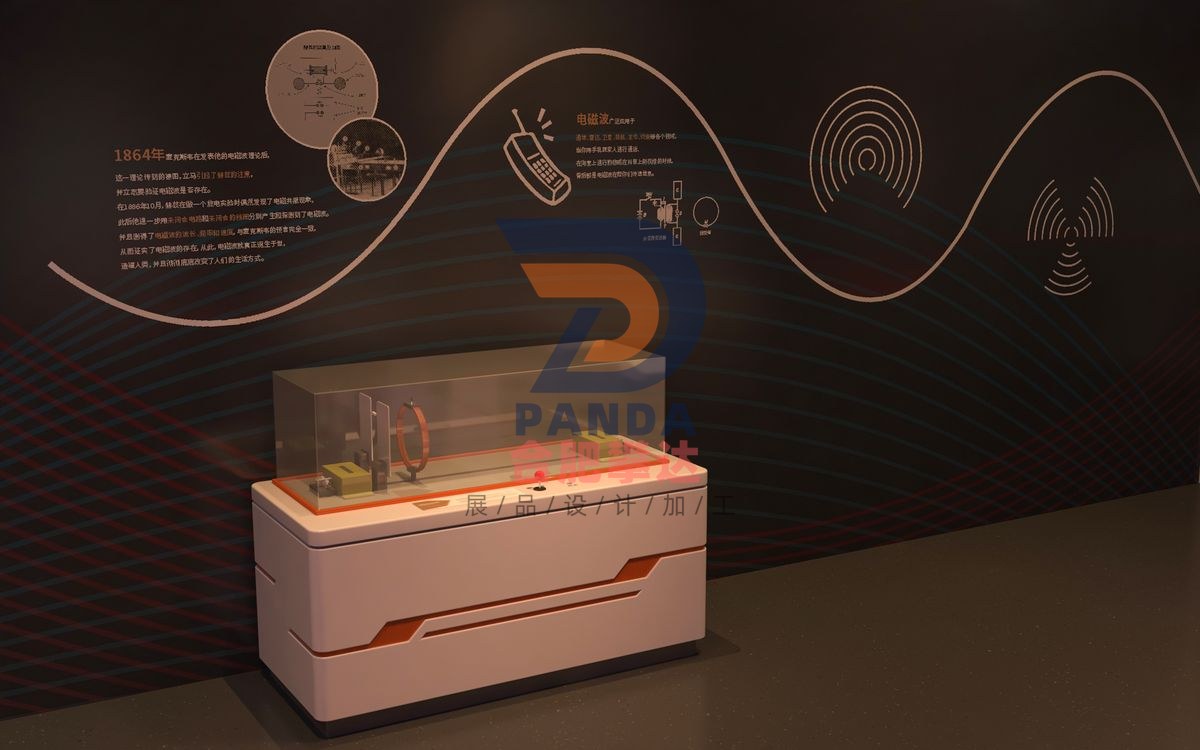
Discovery of Electromagnetic Waves
Electromagnetism · Interactive
- DimensionsSubject to on-site plan
- PresentationInteractive
- PricingQuoted by manufacture spec
Purpose & Scientific Principle
aims to let the audience understand through experiments how Hertz verified Maxwell's theory on the existence of electromagnetic waves.
How to Operate
When Hertz studied physics with Helmholtz, he studied Maxwell's electromagnetic theory. At that time, the German physics community generally believed in Weber's theory that electric and magnetic forces could be transmitted instantaneously. Therefore, Hertz decided to use experiments to verify the theories of Weber and Maxwell to see who was right.
According to Maxwell's theory, electrical disturbances can radiate electromagnetic waves. So, Hertz first designed an electromagnetic wave generator.
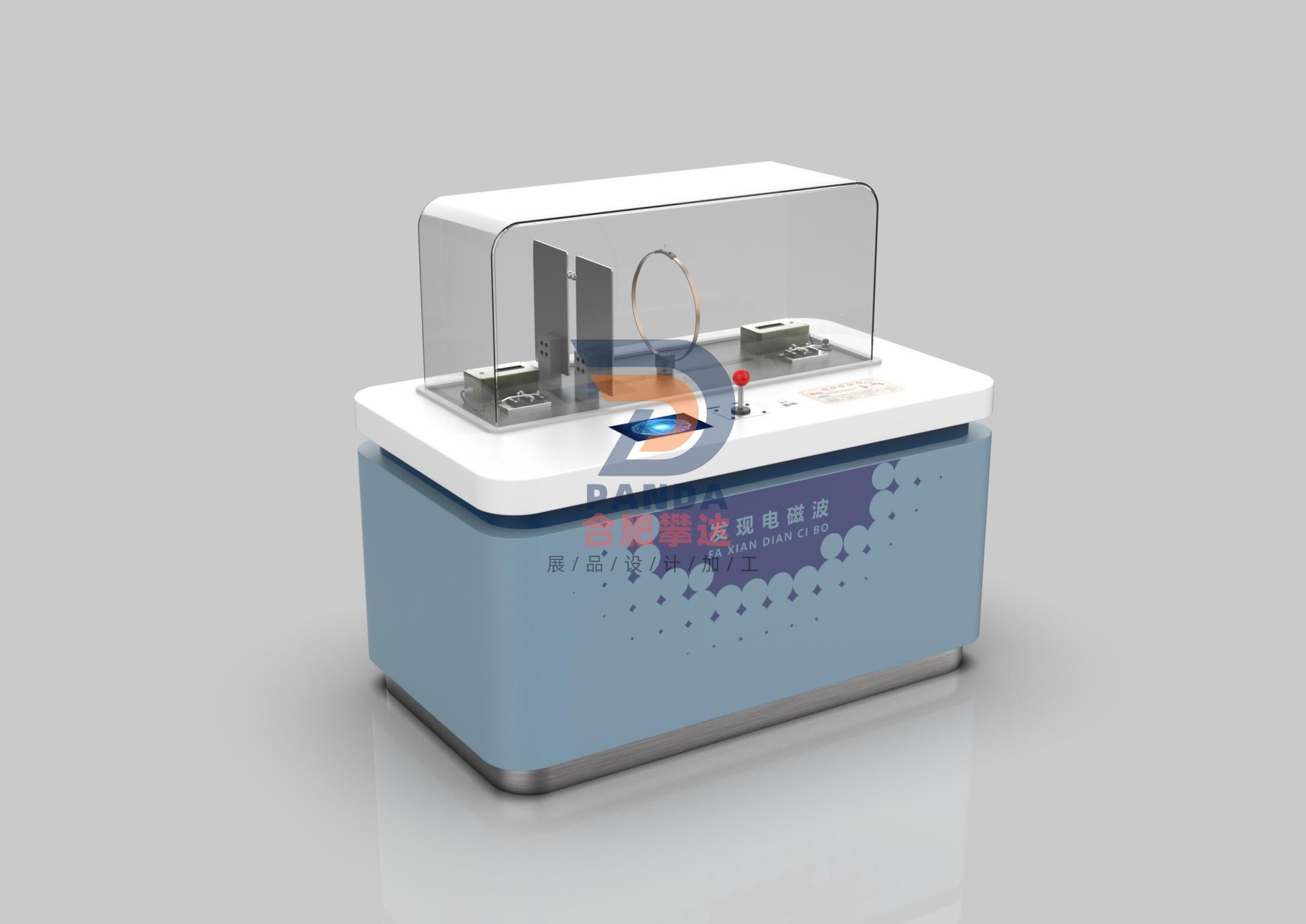
He built an oscillator made of copper knobs. Each knob is connected to a high-voltage induction coil and is separated from the other knob by a small gap across which the spark can travel. When the current of the induction coil is suddenly interrupted, it induces a high voltage causing sparks to be generated between the spark gaps. Instantly, the charge oscillates between the zinc plates through the spark gap with a frequency of millions. If Maxwell's theory was correct, electromagnetic waves would be produced at this time.
To monitor electromagnetic waves, Hertz designed another receiver. He bent a short length of wire into a circle, leaving a small spark gap between the ends of the wire. If there are electromagnetic waves, an induced voltage will be generated on this small coil, causing the spark gap to generate sparks. Because the sparks were extremely small, he had to sit in a dark room and conduct the experiment. Sure enough, during the experiment, Hertz saw the generation of weak sparks with his own eyes!
On November 5, 1887, Hertz published a paper entitled "On Induction Phenomena Caused by Electrical Processes in Insulators", summarizing his important discoveries. This paper directly caused a sensation in the entire physics community. Maxwell's electromagnetic theory turned around and was regarded as a classic.
An oscillator made of copper knobs. Each knob is connected to a high-voltage induction coil and is separated from the other knob by a small gap across which the spark can travel. When the current of the induction coil is suddenly interrupted, it induces a high voltage causing sparks to be generated between the spark gaps. After an instant, the charge oscillates between the zinc plates through the spark gap with a frequency of millions.
Related Exhibits


Need a quote for this piece or a full exhibit configuration? Tell us your venue area, theme direction, and budget range.