

Newton's second law of motion
Mechanics in Motion · Interactive
- DimensionsSubject to on-site plan
- PresentationInteractive
- PricingQuoted by manufacture spec
Purpose & Scientific Principle
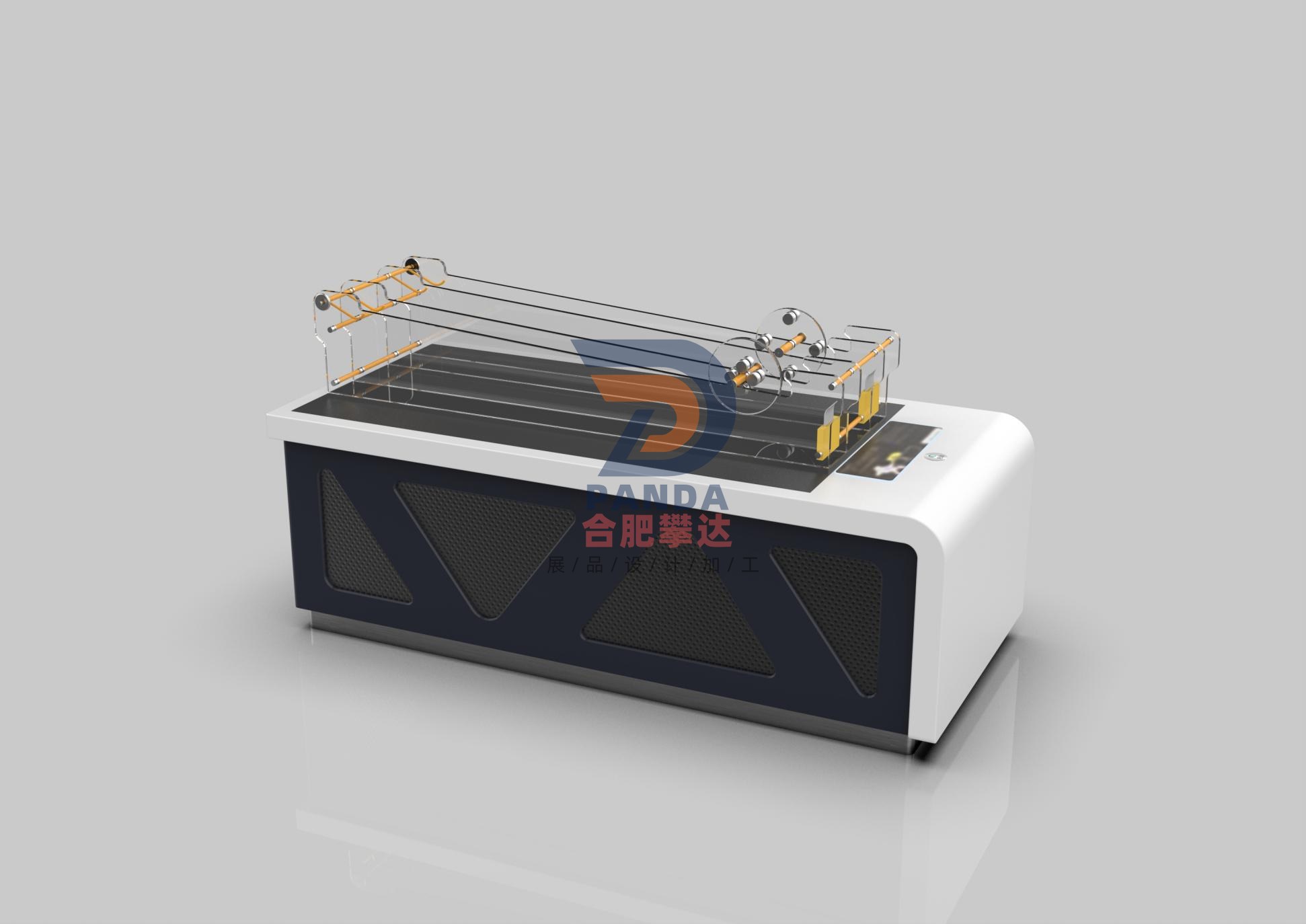
Through the control variable method, weights are used to drive the movement of the car to vividly demonstrate Newton's second law of motion.
How to Operate
In 1687, Newton published "Mathematical Principles of Natural Philosophy", summarizing Newton's three laws of motion. Among them, the second law of motion (ie, the law of acceleration):
For a particle with a momentum of
The common expression of Newton's Second Law of Motion-Force and Acceleration is: the acceleration of an object is directly proportional to the force, inversely proportional to the mass of the object, and proportional to the reciprocal of the mass of the object; the direction of acceleration is the same as the direction of the force. This law was proposed by Isaac Newton in 1687 in his book Principles of Natural Philosophy. Newton's second law of motion and the first and third laws together form Newton's laws of motion, which describe the basic laws of motion in classical mechanics.
Related Exhibits

Need a quote for this piece or a full exhibit configuration? Tell us your venue area, theme direction, and budget range.