
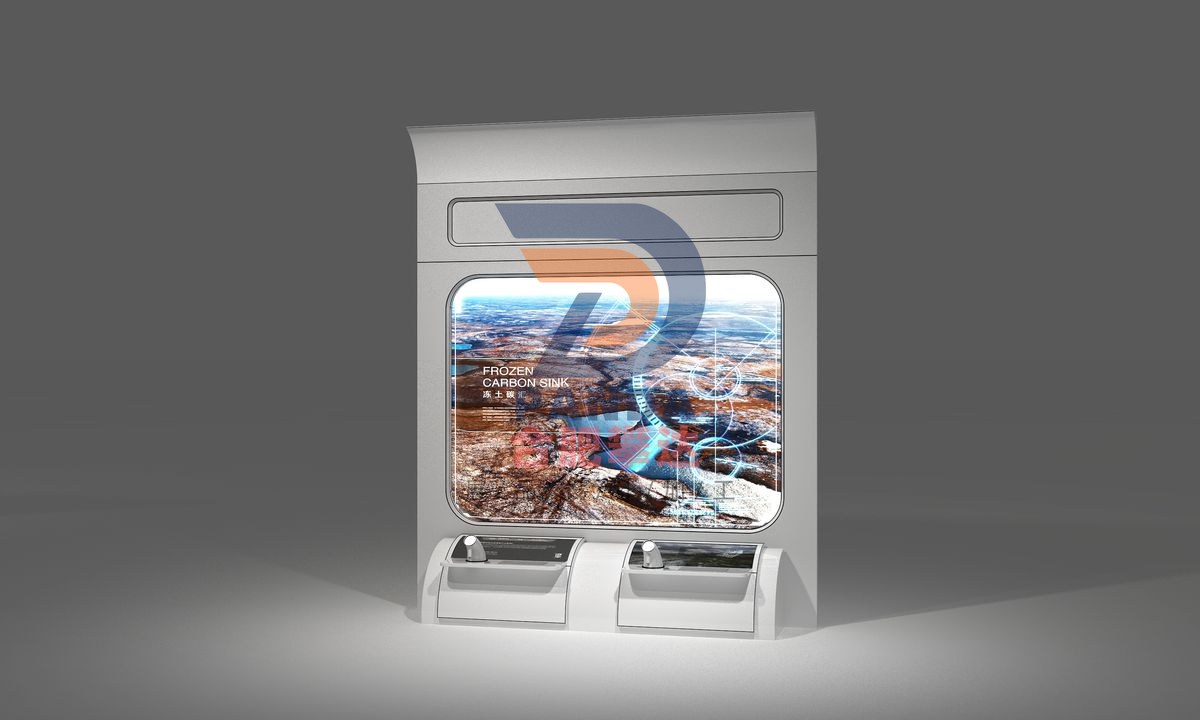
Frozen soil carbon sink
Earth & Planet · Interactive
- DimensionsSubject to on-site plan
- PresentationInteractive
- PricingQuoted by manufacture spec
Purpose & Scientific Principle
The exhibits create an ecological scene, deepen the public's understanding of the principles of carbon storage and carbon sequestration in frozen soil through simulated observation and exploration, and call on the public to pay attention to environmental protection and climate change issues in permafrost areas.
How to Operate
The total area of frozen soil in the world is approximately 35 million square kilometers, accounting for 25% of the earth’s continental area. Among them, permafrost areas account for 15% of the global soil area, but store 60% of the global soil carbon.
There is a special kind of soil that is below zero degrees Celsius and contains "ice". It is distributed in high latitudes and high altitudes and is called permafrost. Frozen soil is generally divided into two layers, the upper layer is an active layer that thaws in summer and freezes in winter, and the lower layer is a permafrost layer that does not melt all year round. Permafrost is a product of cold climate, has a strong feedback effect on climate change, and contains rich information about past climate changes. It is also regarded as a sensitive "indicator" of climate change.
Frozen soil carbon sink refers to the carbon storage formed in permafrost areas where the soil temperature is lower than 0°C, which slows down the decomposition rate of organic matter, causing carbon elements to be stored in the soil for a long time. By observing analytical animations and videos of soil carbon storage, the exhibits will introduce the importance of soil carbon sinks, call on the public to pay attention to and protect soil ecosystems, and contribute to environmental protection and climate change.
Permafrost areas account for 15% of the global soil area, but store 60% of global soil carbon and play an important role in environmental and climate change. Therefore, environmental protection and climate change issues in permafrost areas urgently need to attract public attention and concern.
The exhibits will introduce the protection of permafrost carbon sinks, including controlling greenhouse gas emissions and strengthening environmental protection and restoration of permafrost areas. At the same time, environmental and climate change issues in permafrost areas will also be introduced, calling on the public to pay attention to and protect permafrost areas, and contribute to environmental protection and climate change.
The exhibits aim to give the audience a deeper understanding of the concept and role of permafrost carbon sinks, recognize the importance of ecosystems, and stimulate their interest and actions in environmental protection through the use of microscope simulation observation and a combination of analytical animations and videos.
Related Exhibits




Need a quote for this piece or a full exhibit configuration? Tell us your venue area, theme direction, and budget range.