
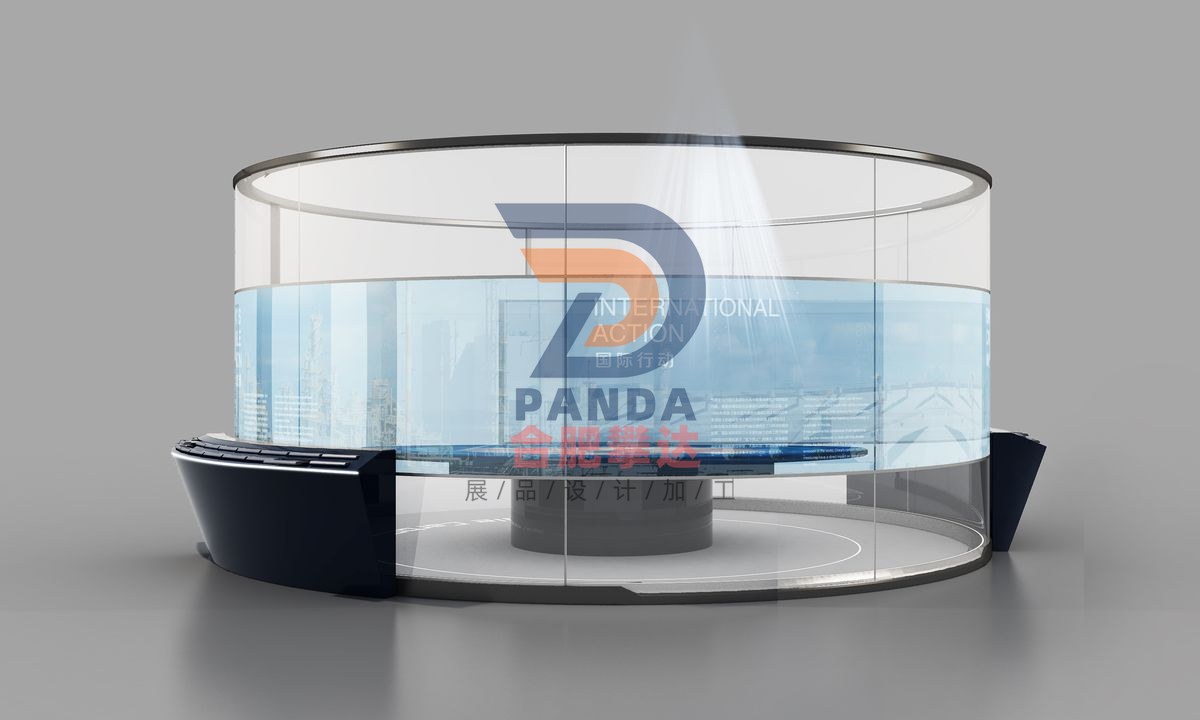
International Action
Earth & Planet · Interactive
- DimensionsSubject to on-site plan
- PresentationInteractive
- PricingQuoted by manufacture spec
Purpose & Scientific Principle
Slideshow images create a historical atmosphere and allow the public to understand the development history of global carbon reduction actions.
How to Operate
Since the United Nations Framework Convention on Climate Change came into effect in 1994, the Kyoto Protocol came into effect in 2005, and the Paris Agreement was reached in 2015, global climate governance led by the United Nations has experienced tortuous development for more than 20 years. International emission reduction rules have transformed from the "top-down" model under the Kyoto mechanism to the "bottom-up" model under the Paris mechanism. In the future, the development of international law will profoundly affect and promote the consistent development of global collective emission reduction actions at the levels of responsibility transformation, co-governance by major powers, and governance according to law.
•United Nations Framework Convention on Climate Change
The United Nations Framework Convention on Climate Change (UNFCCC or FCCC) was adopted on May 9, 1992 and came into effect on March 21, 1994. More than 190 countries have joined the convention.
•The Kyoto Protocol
The full name of the "Kyoto Protocol" is the "Kyoto Protocol of the United Nations Framework Convention on Climate Change". It was formulated by the third meeting of the participating countries of the United Nations Framework Convention on Climate Change in Kyoto, Japan, in December 1997. Its goal is to "stabilize greenhouse gas levels in the atmosphere at an appropriate level to prevent severe climate change from causing harm to humans."
•Paris Agreement
The Paris Agreement is a climate change agreement signed by 178 parties around the world. It is a unified arrangement for global actions to address climate change after 2020. The long-term goal of the Paris Agreement is to limit the increase in global average temperature to less than 2 degrees Celsius compared with pre-industrial times, and to strive to limit temperature increases to 1.5 degrees Celsius.
The exhibits start from the history of the development of international action for climate protection and use projection technology to display the film on a transparent glass enclosure. According to the development of the timeline, some conventions and protocols developed by mankind to deal with climate change are shown to the audience scene by scene.
Related Exhibits
Need a quote for this piece or a full exhibit configuration? Tell us your venue area, theme direction, and budget range.