
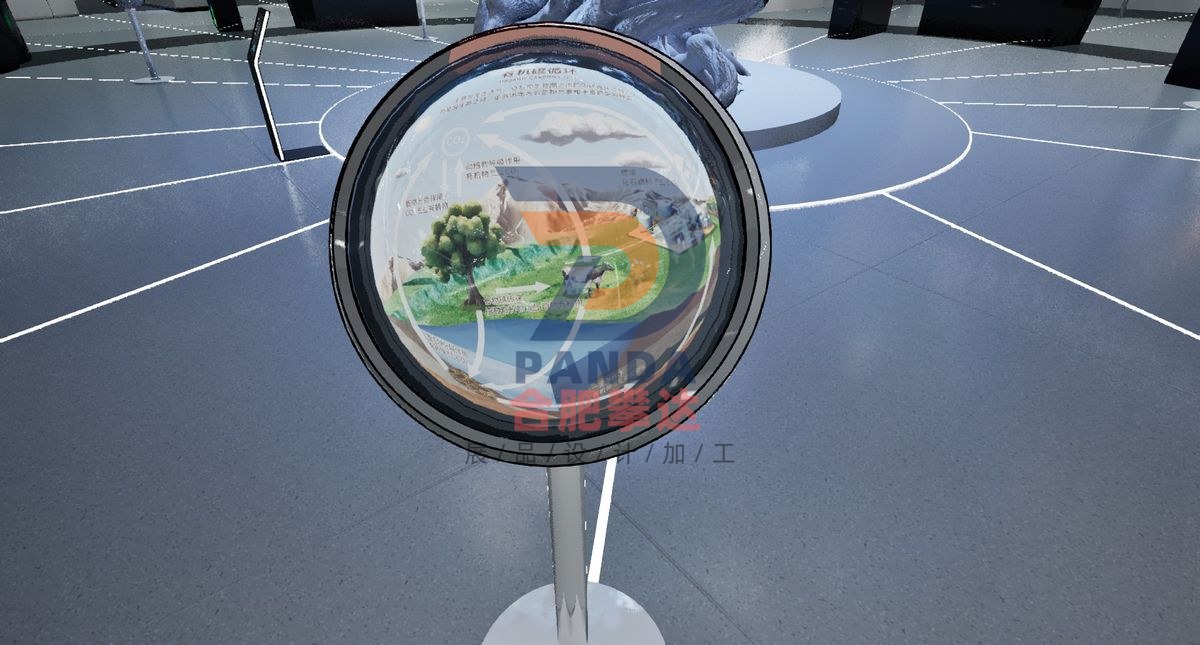
Organic carbon cycle
Earth & Planet · Interactive
- DimensionsSubject to on-site plan
- PresentationInteractive
- PricingQuoted by manufacture spec
Purpose & Scientific Principle
The process of organic carbon cycle is introduced through the dynamic display of cold light film.
How to Operate
The short-term organic carbon cycle mainly refers to the closed-loop cycle process that occurs between the atmospheric carbon pool and the biosphere carbon pool. A cycle period is about decades or even hundreds of years. This cycle is like a paintbrush of life, connecting the biosphere and the external environment as a whole, allowing carbon elements to enter, flow, and be stored in the biosphere, painting a huge total biomass and rich biological species, adding color to the earth.
Carbon dioxide (CO2) in the atmosphere is absorbed by plants on land and in the ocean, and then returned to the atmosphere as carbon dioxide through biological or geological processes and human activities. The carbon cycle on the earth is mainly manifested in that green plants in natural ecosystems absorb carbon dioxide from the air, convert it into carbohydrates through photosynthesis, and release oxygen. At the same time, carbon dioxide is released into the atmosphere through biogeochemical cycle processes and human activities. The green plants in the natural ecosystem convert the absorbed carbon dioxide into plant carbohydrates through photosynthesis, and then convert it into animal carbohydrates through the food chain. The respiration of plants and animals converts part of the carbon taken into the body into carbon dioxide and releases it into the atmosphere. This cycle of carbon dioxide in the atmosphere takes about 20 years. The other part constitutes biological organisms and is stored by itself; after the death of animals and plants, most of the animal and plant residues are eventually emitted into the atmosphere in the form of carbon dioxide through the decomposition of microorganisms. A small part is buried in sediments before being decomposed by microorganisms, and is converted into fossil fuels (coal, oil, natural gas, etc.) over a long period of time. When these fossil fuels weather or are burned as fuel, the carbon in them is converted into carbon dioxide and is emitted into the atmosphere.
The exhibits extract knowledge points about the organic carbon cycle and place them next to the Earth Watch exhibits in the form of cold light sheets, echoing the theme of the exhibition area - "Low-carbon development, shared destiny". Give the audience an immersive experience of the scientific connotation and significance of "carbon peaking and carbon neutrality".
Related Exhibits


Need a quote for this piece or a full exhibit configuration? Tell us your venue area, theme direction, and budget range.