
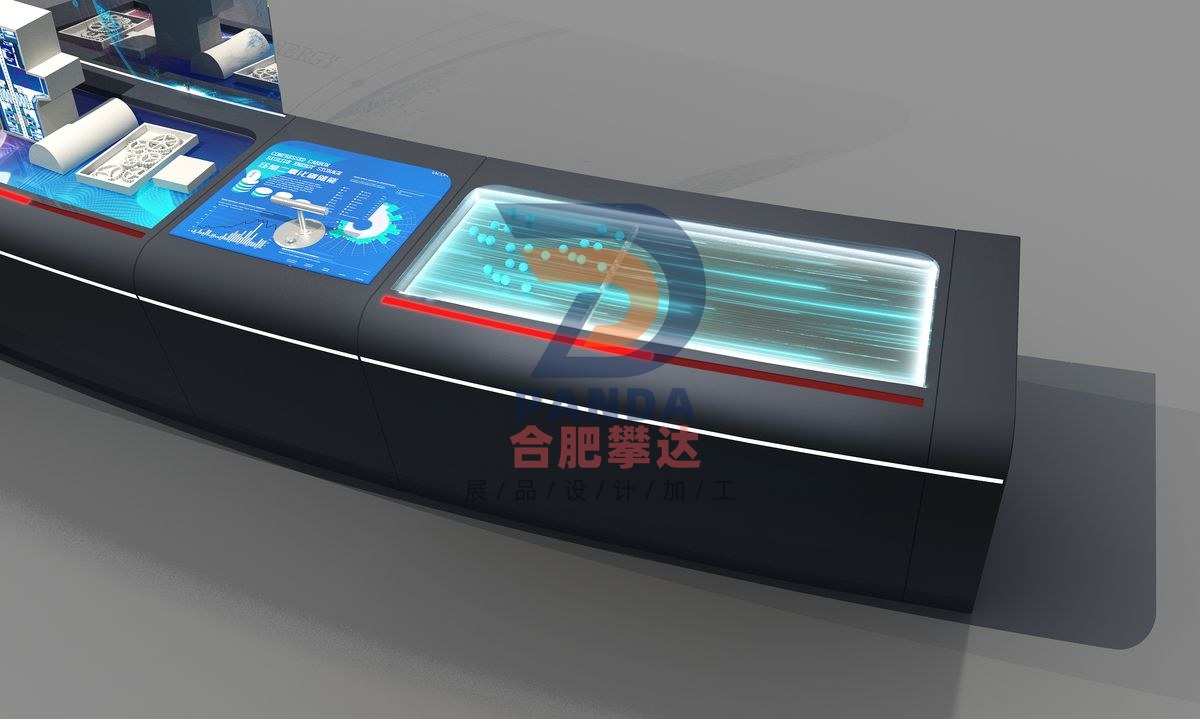
Compressed Carbon Dioxide Energy Storage
Earth & Planet · Interactive
- DimensionsSubject to on-site plan
- PresentationInteractive
- PricingQuoted by manufacture spec
Purpose & Scientific Principle
This exhibit demonstrates the process of using compressed gas to release work and drive generators to generate electricity through electromechanical interaction, allowing the audience to understand the principle of compressed gas energy storage. Stimulate the audience's interest in learning energy storage technology and guide the audience to pay attention to the application of energy storage technology in daily energy production activities.
How to Operate
Carbon dioxide energy storage technology is a new type of mechanical energy storage technology based on compressed air energy storage and Brayton cycle gas power generation. It has the advantages of high energy storage density, long operating life, and compact system equipment, and has good development and application prospects.
The working principle of the carbon dioxide energy storage system. The system mainly consists of high and low pressure storage tanks, compressors, turbines and thermal and cold storage units; the thermal and cold storage units mainly include recoolers, reheaters, thermal storage tanks and cold storage tanks.
Its working principle can be divided into two processes: energy storage stage and energy release stage.
When storing energy, the low-pressure liquid CO 2 in the low-pressure storage tank absorbs heat and vaporizes through the cold storage heat exchanger, and then is compressed to a supercritical state through a (multi-stage) compressor. At the same time, the compression heat is absorbed through the recooler and the heat is stored in the heat storage tank through the heat storage medium. Finally, the supercritical state CO 2 is stored in the high-pressure storage tank, that is, the electrical energy is stored in the form of thermal energy and potential energy;
When releasing energy, the supercritical CO 2 in the high-pressure storage tank is heated by the reheater, and then enters the turbine to drive the turbine to generate electricity. At the same time, the cold energy of the low-temperature heat storage medium at the outlet of the reheater is stored in the cold storage tank. The CO 2 at the outlet of the final turbine is cooled to a liquefied state through the cooler and cold storage heat exchanger, and is finally stored in the low-pressure storage tank, which converts thermal energy and potential energy into electrical energy for output.
The exhibit is designed to demonstrate how compressed carbon dioxide energy storage works. A pump is set up for the audience to operate. The small balls symbolizing carbon dioxide are compressed to simulate the energy storage process. After the audience operates the release button, the small balls begin to diffuse to simulate the release of gas and generate power. By allowing the audience to experience the entire process in an interactive way, they can deepen their understanding of energy storage and release.
Related Exhibits
Need a quote for this piece or a full exhibit configuration? Tell us your venue area, theme direction, and budget range.