
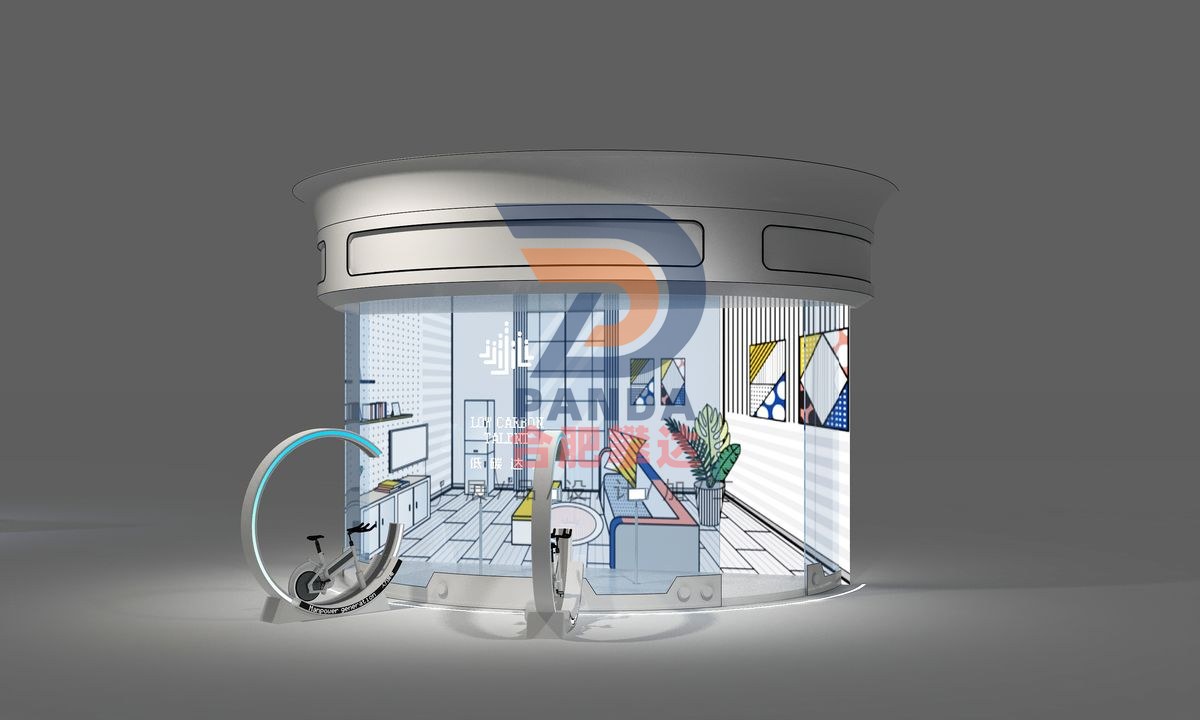
Human Power Generation
Earth & Planet · Interactive
- DimensionsSubject to on-site plan
- PresentationInteractive
- PricingQuoted by manufacture spec
Purpose & Scientific Principle
The exhibition is equipped with two sets of exercise bike simulation power generation devices, allowing the audience to participate in and experience the process of power generation, so that the public understands the importance of saving electricity.
How to Operate
The exhibition items allow the audience to freely participate in the interaction with the exhibits. The hands-on fun stimulates their strong scientific curiosity, and they learn about scientific principles such as the law of conservation of energy, allowing them to search for science, learn science, apply science, and find solutions to scientific problems during the game.
The law of conservation of energy is one of the universal basic laws of nature. Generally stated as follows: Energy will neither be created out of thin air nor disappear out of thin air. It will only be converted from one form to another form, or transferred from one object to other objects, while the total amount of energy remains unchanged. It can also be expressed as: the change of the total energy of a system can only be equal to the amount of energy transferred into or out of the system. The total energy is the sum of the mechanical energy, internal energy (thermal energy) and any form of energy other than mechanical energy and internal energy of the system. The process of human power generation is the process of converting biological energy into mechanical energy and finally into electrical energy. The electrical energy is generated for the work of electrical equipment.
The meaning of one kilowatt hour of electricity
Many people may think that 1 kilowatt hour of electricity is insignificant, but 1 kilowatt hour of electricity is of considerable use and can bring a lot of convenience to life. 1 kilowatt hour of electricity allows a 25W light bulb to light up continuously for 40 hours, a household refrigerator to run for 24 hours, and a 1P air conditioner to run for 1.5 hours.
At the same time, saving 1 kilowatt hour of electricity also plays a great role in saving resources and protecting the environment. For every kilowatt hour of electricity saved, 0.4 kilogram of standard coal and 4 liters of purified water are saved; at the same time, 0.997 kilogram of carbon dioxide, 0.03 kilogram of sulfur dioxide, 0.015 kilogram of nitrogen oxide and other pollutants are reduced.
The exhibit uses two sets of exercise bikes to simulate the power generation process. The audience pedals on the bicycle to simulate the rotation of the rotor of the generator. The number of turns and speed of the rotor simulates the amount of electricity generated. It is ultimately used to simulate the work of electrical equipment, allowing the audience to feel the significance of saving electricity. The conservation of energy is used in the entire process. When the audience pedals on the exercise bike, biological energy is converted into mechanical energy, and the mechanical energy is converted into electrical energy through simulated power generation equipment.
Related Exhibits



Need a quote for this piece or a full exhibit configuration? Tell us your venue area, theme direction, and budget range.