
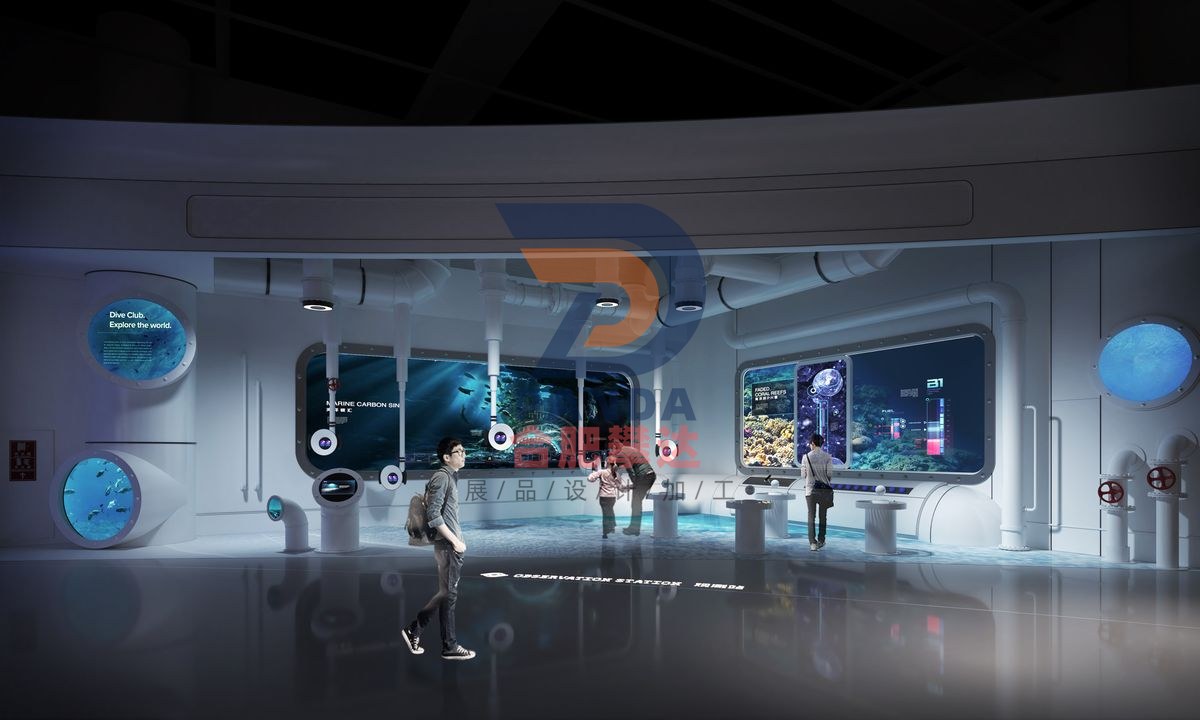
Marine Carbon Sink
Earth & Planet · Interactive
- DimensionsSubject to on-site plan
- PresentationInteractive
- PricingQuoted by manufacture spec
Purpose & Scientific Principle
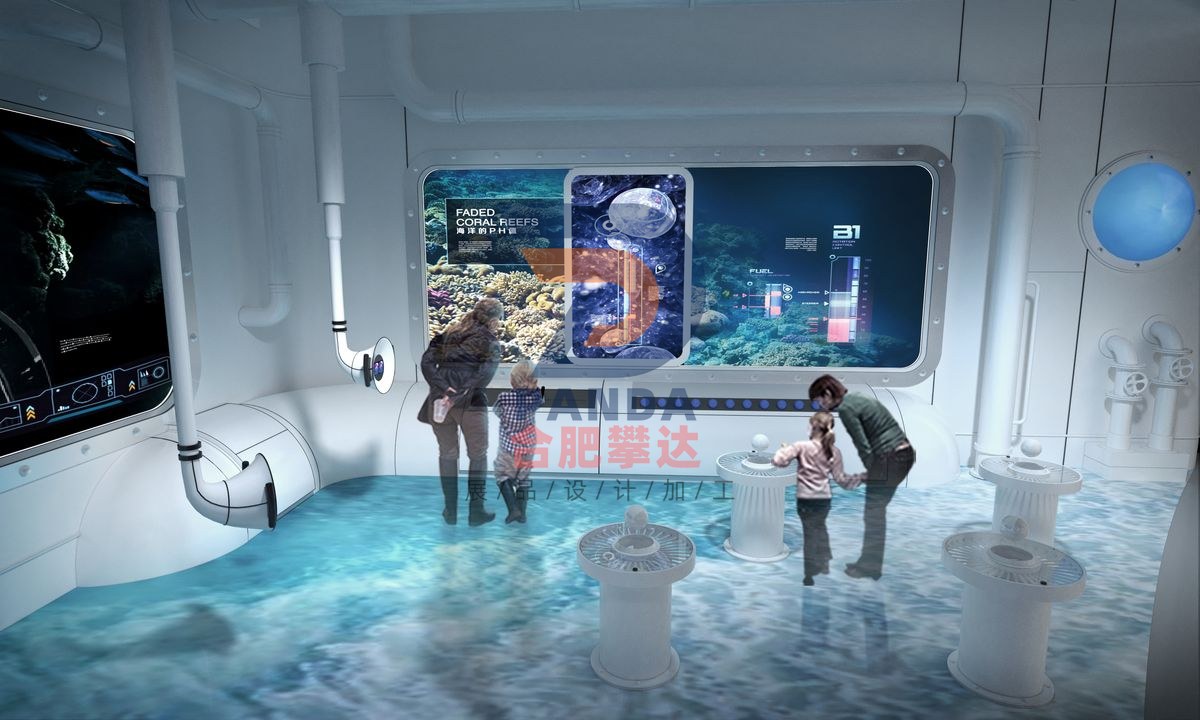
The exhibits create an ecological scene and explore through periscope-style simulated observation, allowing the audience to understand the cycle and transformation of carbon in the marine ecosystem, as well as the role and significance of the marine carbon sink in the global carbon cycle, and deepen the public's understanding of the principles of ocean carbon storage and carbon sequestration.
How to Operate
The ocean accounts for 71% of the earth's surface area and is the largest "carbon pool" on the earth. Its carbon storage capacity is nearly 20 times that of land and nearly 50 times that of the atmosphere. About 30% to 50% of carbon emissions caused by human activities are absorbed by the ocean, playing a role as a buffer for global climate change. The process, activity and mechanism of using ocean activities and marine organisms to absorb carbon dioxide from the atmosphere and fixing and storing it in the ocean is called blue carbon, also called ocean carbon sink. Developing ocean carbon sinks and improving ocean carbon sink capabilities are important ways to help China achieve its carbon peak and carbon neutrality goals.
The ocean's carbon sink processes mainly include "solubility pump", "carbonate pump", "biological pump" and "micro-biological carbon pump". Among them, the first two are physical and chemical methods, and the latter two are biological methods.
The ocean carbon sink process is like a water pump, continuously transporting carbon dioxide from the atmosphere into the ocean. The ocean's carbon sink processes mainly include "solubility pump", "carbonate pump", "biological pump" and "micro-biological carbon pump". Among them, the first two are physical and chemical methods, and the latter two are biological methods.
How does the "pump" work?
The solubility pump uses the partial pressure of carbon dioxide in the atmosphere to be higher than that in the ocean, causing carbon dioxide to dissolve in seawater. Under the gravity of high-density seawater, it drags carbon dioxide into the deep sea, thereby entering the millennium-scale carbon cycle and forming ocean carbon storage.
Carbonate pumps store carbon dioxide on the seafloor through carbonate deposition. However, when carbonate deposition exceeds a certain threshold, the carbonic acid system of seawater will lose balance and release carbon dioxide, so it is a "good intention but a disservice" type player.
The biological pump refers to the photosynthetic carbon sequestration process of phytoplankton in the ocean. The photosynthetic carbon fixation of phytoplankton is the starting point of the biological pump, and the particulate organic carbon produced by it is transferred from the ocean surface to the deep layers and even the seabed.
The micro biological carbon pump refers to the use of microorganisms and phytoplankton in the ocean to convert active organic carbon into inert organic carbon, so that the organic carbon can be stored for a long time. Because inert organic carbon is not easily degraded, it can accumulate to form a huge carbon pool.
Types of carbon sinks in marine ecosystems include mangroves, salt marshes, seagrass beds, macroalgae, shellfish, etc.
Mangroves, salt marshes and seagrass beds, these three coastal blue carbon ecosystems are typical carbon storage experts. The coverage area of these three types of ecosystems is less than 1/200 of the seabed, and the plant biomass accounts for only 1/2000 of the land, but their carbon storage is more than half of the ocean's carbon storage.
Mangroves, known as "coastal guards" and "green lungs of the ocean", are wetland woody plant communities composed of evergreen trees or shrubs dominated by mangrove plants. In the land-sea intersection, mangroves are periodically inundated by tides, and sediments are in a state of anoxia for a long time. Roots and litter decompose slowly due to lack of oxygen, creating ideal conditions for carbon burial. The total global mangrove area accounts for only 0.5% of the global coastal area, but it accounts for 10% to 15% of the carbon buried in sediments.
Coastal salt marshes, also called "tidal marshes," are located between land and open ocean or brackish water. Plants are the key to realizing the carbon sink function of salt marshes. The surface water of the salt marsh is alkaline and the soil has high salt content. Reeds, tamarisk and other plants grow there.
Seagrass grows continuously over a large area in a suitable environment, forming a seagrass bed. Seagrass beds not only provide habitat for numerous marine organisms, they also fix carbon dioxide through photosynthesis and reduce water velocity and turbulence intensity, causing particulate carbon to settle and be buried in seafloor sediments.
90% of photosynthesis on earth is completed by marine algae. Marine algae can efficiently utilize solar energy, fix carbon dioxide through photosynthesis, and convert inorganic carbon into organic carbon. During its primary production process, it is also necessary to absorb dissolved nutrients (such as nitrates and phosphates) from seawater, which increases the pH value of surface water and further reduces the partial pressure of carbon dioxide in the water body. These two processes increase the difference in carbon dioxide partial pressure on both sides of the interface between the ocean and the air, promoting the diffusion of carbon dioxide in the atmosphere into seawater, causing seawater to absorb more carbon dioxide.
Marine shellfish include oysters, scallops, clams, conch, abalone, etc. Shellfish exhibit two ways of carbon sequestration: soft tissue growth and shell formation. By filtering and feeding on suspended particulate organic carbon in the water body, it promotes the growth of its soft body tissues and forms shells from the mantle secretions of the soft body tissues. During the formation process, the shell undergoes a series of changes with the chemical elements in seawater, and calcium carbonate accounts for about 95% of its composition. Shells account for about 60% of the total mass of cultured shellfish. For 1 ton of shellfish produced in the ocean, shells alone can fix 0.25 tons of carbon dioxide.
The exhibits aim to show the audience the beautiful ecological landscape of the ocean. In order to fit the theme of the exhibits, five types of marine carbon sink scenes are set: algae carbon sequestration, shellfish carbon sequestration, mangrove carbon sequestration, seagrass bed carbon sequestration, and salt marsh carbon sequestration. A periscope-style interactive viewing method is used, combined with multimedia display, to allow the audience to understand different marine carbon sink scenes and learn relevant knowledge.
The design principle of the exhibits is to use periscope observation and multimedia display as the main forms. Through intuitive visual effects and rich content display, the audience will be guided to understand the concept, formation process and role of marine carbon sinks, as well as the importance of marine ecosystems and environmental protection, and promote the popularization and development of environmental awareness and popular science education.
The periscope-style observation window design enhances the interactivity of the exhibits and is more attractive to young people. Combined with VR interactive equipment, compared with traditional missionary knowledge display, it is more in line with the knowledge needs of young people.
Related Exhibits
Need a quote for this piece or a full exhibit configuration? Tell us your venue area, theme direction, and budget range.