
Global Warming
Earth & Planet · Interactive
- DimensionsSubject to on-site plan
- PresentationInteractive
- PricingQuoted by manufacture spec
Purpose & Scientific Principle
Through artistic light boxes and static displays of pictures and texts, important basic concepts related to carbon emissions were explained to the audience.
How to Operate
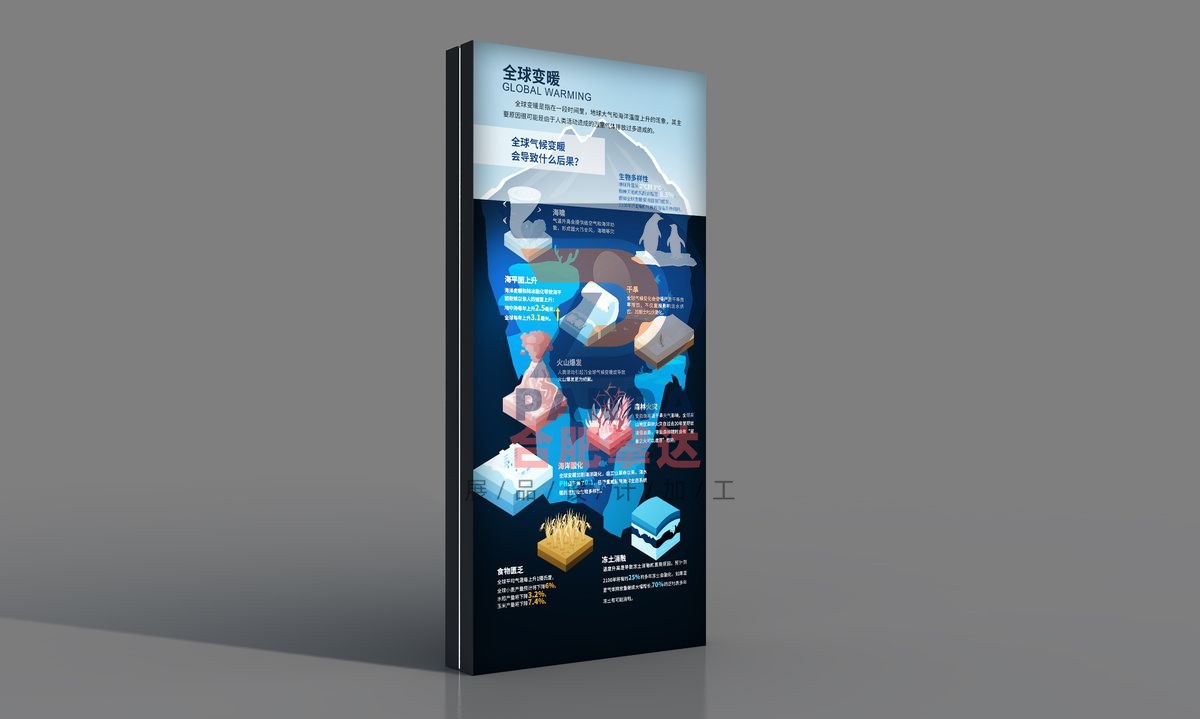
Global warming refers to the phenomenon that the temperature of the earth's atmosphere and oceans rises over a period of time, mainly referring to the temperature rise caused by human factors. The main reason is likely due to excessive emissions of greenhouse gases (representing the gas carbon dioxide).
Global warming will cause polar glaciers and permafrost to melt, sea levels to rise, pests and diseases to increase, local land desertification, tropical rainforests to disappear, extreme cold, high temperatures, storms, etc. Leading to the destruction of the balance of natural ecosystems, thus directly threatening human survival.
What are the consequences of global warming?
Sea level rise: From 1901 to 2010, the global average sea level rose by 19 centimeters, which sounded the alarm for coastal cities. If the sea level rises by more than 1 meter, some world-class cities, such as New York and Shanghai, will face the disaster of being submerged.
Permafrost melting: By the end of the 21st century, even if strong emission reduction actions are taken, the global frozen soil area will be reduced by 40%. If greenhouse gas emissions continue to increase significantly, 80% of the near-surface permafrost may melt.
Biodiversity: If the temperature of the earth increases from 2°C to 3°C, the risk of species extinction will increase to 8.5%. If global warming maintains its current trend, the earth's temperature will rise by 4.3°C in 2100, and about 1/6 of species will face the risk of extinction.
Ocean acidification: Since the industrial revolution, the acidity of surface seawater has increased by 0.1 units. Affected by ocean acidification, the frequency of coral bleaching has increased from once every 27 years to once every 4 years from 1985 to 2020.
Food scarcity: For every 1°C increase in global average temperature, global wheat production is expected to decrease by 6%, rice production by 3.2%, and corn production by 7.4%.
Drought: Since 2000, approximately 42% of droughts have occurred due to climate change. Compared with the past 20 years, the frequency and duration of droughts have increased by 29%, and more than 2.3 billion people around the world are facing water stress.
Tsunami: Rising temperatures will provide kinetic energy to the air and ocean, and even disasters such as super typhoons, hurricanes, and tsunamis.
Forest fires: Forest fires in high mountain areas around the world have increased in the past 20 years, and the world has entered a new round of forest fire outbreaks.
Volcanic eruptions: Global warming and prolonged droughts caused by climate anomalies have increased the frequency and intensity of volcanoes.
The exhibits extract knowledge points about global warming and place them next to the Watch the Earth exhibit in the form of artistic light boxes, echoing the theme of the exhibition area - "Revealing the role of carbon in the evolution of the earth and life, and showing the destiny choices of mankind behind the "double carbon" goal." Give the audience an immersive experience of the scientific connotation and significance of "carbon peaking and carbon neutrality".
Related Exhibits






Need a quote for this piece or a full exhibit configuration? Tell us your venue area, theme direction, and budget range.